
Why Restoration Will Become a Hard Requirement for Energy Assets
For decades, environmental restoration was optional. Nice to have. Good for reports. Rarely decisive. That era is ending. As renewable infrastructure scales and reshapes landscapes at industrial speed, restoration is moving from voluntary commitment to structural requirement. Not because of ideology — but because markets, regulators, and communities are converging on the same conclusion: Energy assets that change ecosystems without repairing them will not remain viable.
ENTROPY888 PERSPECTIVE
Chris Boubalos
1/17/2026
The Shift From Permission to Continuity
In the past, energy projects needed one thing to succeed: permission.
Permits.
Grid access.
Financing.
Once granted, assets operated largely uninterrupted for decades.
Today, continuity matters more than permission.
Projects face ongoing scrutiny around:
land use
biodiversity impact
water systems
community acceptance
As argued in The End of Passive Green Assets, renewable infrastructure is no longer invisible. Its impacts are cumulative — and increasingly contested.
Restoration is becoming the condition for operational continuity, not just initial approval.
Why “Green” Is No Longer a Sufficient Shield
The assumption that “green” assets are inherently acceptable is eroding.
Solar parks displace land.
Wind farms fragment habitats.
Hydroelectric projects permanently alter rivers.
These effects do not disappear because emissions are lower.
As explained in The Grid-First Fallacy, systems designed around a single objective externalize secondary costs until those costs return as constraints. In environmental terms, those constraints now appear as:
delayed permits
stricter conditions
legal challenges
political resistance
Being renewable is no longer enough to remain unchallenged.
Restoration Is Becoming a Risk Management Tool
Restoration is often framed as a moral or ecological choice.
Markets are starting to frame it differently: as risk mitigation.
Assets that invest in restoration:
reduce long-term regulatory exposure
stabilize community relationships
lower the probability of shutdowns or retrofits
improve permitting resilience for future expansions
This mirrors the financial logic outlined in Why Debt Is the Real Enemy of Renewable Projects: systems that assume stability and ignore downside eventually face nonlinear risk.
Restoration reduces tail risk.
Financial Fragility Blocks Environmental Responsibility
Here is the inconvenient truth:
Most renewable assets do not avoid restoration because they don’t care.
They avoid it because they can’t afford it.
Grid-dependent projects operate under:
curtailment pressure
volatile pricing
rigid debt service
As shown in Renewables Without Bitcoin Are Financially Broken Assets, financially fragile systems have no capacity for long-term investment beyond survival.
Restoration requires patient capital.
Fragile assets don’t have it.
Curtailment Is Lost Restoration Capital
Curtailment is usually discussed in market terms.
It is also ecological loss.
Every megawatt-hour that is curtailed:
destroys value
removes capital from the system
eliminates funding potential for repair
As argued in Flexible Monetization Is the New Baseload, stability now comes from optionality — the ability to choose when and how value is realized.
Without optionality, restoration remains theoretical.
Why Storage Alone Will Not Satisfy the Requirement
Batteries are increasingly mandatory.
They improve:
grid stability
short-term arbitrage
dispatch efficiency
They do not:
generate long-duration capital
fund ecological repair
decouple assets from grid pricing
Storage helps projects survive the grid.
It does not help them meet future restoration expectations.
That gap matters.
Bitcoin as the Enabler of Restoration Capacity
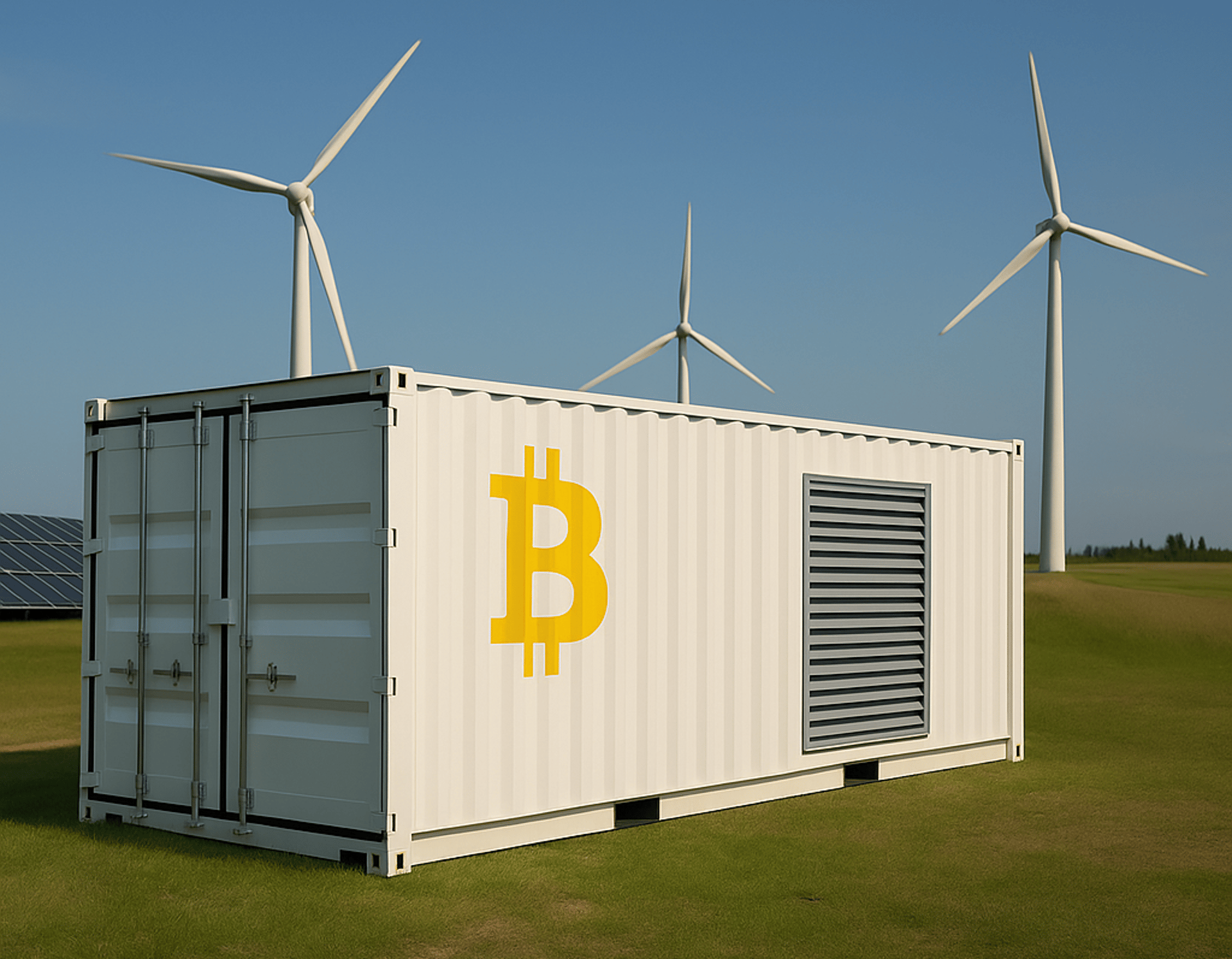
Bitcoin mining, when integrated correctly, is not about profit maximization.
It is about preventing value destruction.
By monetizing surplus energy that would otherwise be curtailed, Bitcoin mining:
stabilizes cash flows
stores value outside volatile power markets
creates patient, long-duration capital
This is the control-layer logic described in Bitcoin Mining Is Not a Business — It’s a Control System.
Once value is stabilized, restoration becomes feasible — structurally, not rhetorically.
From Voluntary Commitment to Embedded Requirement
At this stage of the transition, restoration is no longer an add-on.
It is becoming:
a permitting condition
a financing differentiator
a social license requirement
a long-term asset quality signal
Assets that cannot articulate how they repair what they change will increasingly face:
higher discount rates
longer approval timelines
stricter operating conditions
Not because they are “bad”.
Because they are incomplete.
The Entropy888 Model: Making Restoration Structural
At Entropy888, restoration is not positioned as an offset.
It is embedded into the system.
Through renewable projects that integrate Bitcoin mining, a defined share of Bitcoin-derived value is deliberately allocated to forest regeneration and ecosystem repair.
Not as marketing.
Not as compliance.
But as operational design.
This ensures restoration is funded:
automatically
continuously
independently of grid pricing
That is what turns restoration from a promise into a requirement that can actually be met.
Why Forests Will Anchor the Next Standard
Forests are not symbolic gestures.
They are:
long-duration carbon sinks
biodiversity stabilizers
hydrological regulators
climate buffers
They match the time horizon of energy infrastructure — decades, not quarters.
As discussed in Why Regenerative Energy Will Attract the Next Wave of Capital, capital increasingly favors systems aligned with long-term stability.
Restoration aligns assets with that horizon.
Conclusion: The Requirement Is Already Forming
No regulation has fully codified restoration yet.
Markets do not wait for regulation.
They price risk early.
Assets that:
reshape land
disrupt ecosystems
externalize repair
will face growing friction.
Assets that:
monetize surplus
stabilize value
reinvest in restoration
will endure.
Restoration is becoming a hard requirement not because of activism —
but because incomplete systems do not survive.
Contact
© 2025 Entropy888. All rights reserved.
Powered by Renewable Energy.
Christos Boubalos - Business Development Lead +306972 885885 mob/whatsapp
christos@entropy888.com
-------------------------------------------
General Enquiries - info@entropy888.com