
Why Debt Is the Real Enemy of Renewable Projects
or more than a decade, renewable energy was considered the ideal asset class for leverage. Predictable cash flows. Long-term offtake agreements. Low operational risk. Debt fit perfectly. Banks embraced it. Infrastructure funds structured around it. Governments encouraged it. That model is now structurally misaligned with reality. Renewable energy still works technologically — but the financial assumptions that supported heavy leverage no longer do. Today, debt has become the primary source of fragility in renewable projects.
ENERGY ECONOMICS
Chris Boubalos
1/11/2026
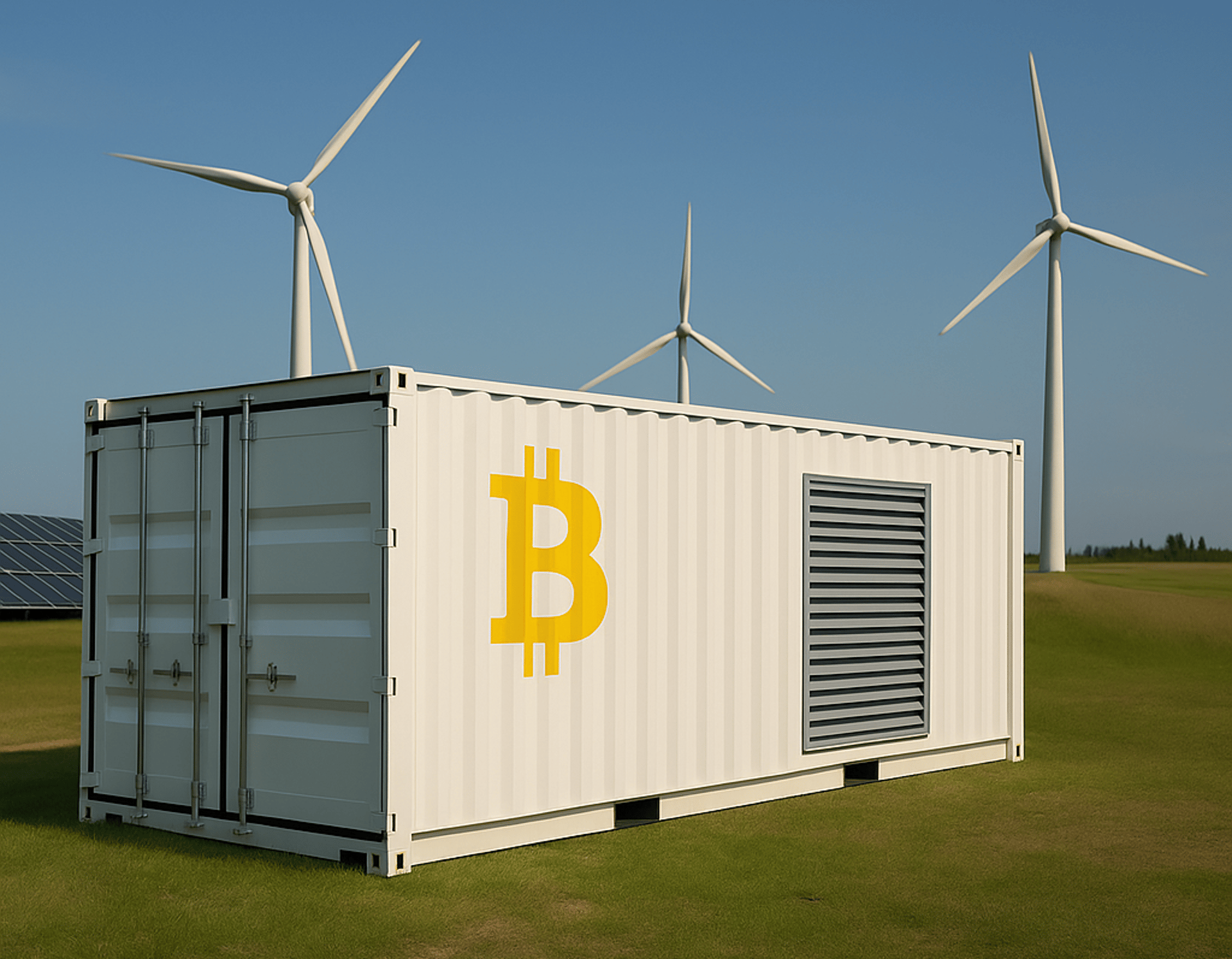
Debt Requires Stability — Renewable Energy Now Operates in Volatility
Debt assumes a world that is predictable.
It assumes:
continuous offtake
stable pricing
limited variance
controllable downside
Modern renewable systems provide none of these consistently.
High penetration of renewables introduces:
frequent price swings
curtailment as a structural feature
merchant exposure
regulatory and political uncertainty
Debt does not adapt to volatility.
It magnifies it.
A leveraged project has no choice:
it must sell power, even when selling destroys value.
This is the same structural weakness described in “The Grid-First Fallacy” — single-exit systems collapse under abundance, and debt accelerates the collapse.
Curtailment Turns Leverage Into a Balance-Sheet Trap
Curtailment is often discussed as an operational inconvenience.
For leveraged assets, it is existential.
Every curtailed megawatt-hour means:
lost revenue
no recovery mechanism
unchanged debt service
Energy can be curtailed.
Debt cannot.
As renewable oversupply becomes structural, leverage converts operational mismatch into financial stress.
Projects are forced to sell energy at zero or negative prices simply to remain solvent.
This is why, as argued in “Renewables Without Bitcoin Are Financially Broken Assets”, grid-only projects are increasingly repriced — not because they are dirty or inefficient, but because they are financially rigid.
Why Low LCOE No Longer Protects Leveraged Projects
Developers still defend leverage with a familiar argument:
“Our LCOE is low — we can survive.”
This logic is obsolete.
LCOE measures production cost.
It does not measure revenue certainty.
In oversupplied markets:
prices collapse
spreads disappear
volatility dominates outcomes
Low-cost energy sold into a saturated grid still produces zero margin.
Debt service, however, remains fixed.
Cheap energy does not save leveraged projects.
It forces them to sell more aggressively — and lose faster.
Batteries Did Not Fix the Financial Problem
Battery storage is now standard.
It improves:
short-term dispatch
grid services
hourly arbitrage
It does not:
eliminate curtailment
create new buyers
establish revenue floors
remove grid dependency
For many projects, batteries increase capex without changing the financial structure.
The project still has one exit.
The debt stack still assumes certainty.
As explained in “Flexible Monetization Is the New Baseload”, economic stability has shifted away from constant production toward constant optionality. Batteries alone do not provide that optionality.
Debt and Grid Dependence Reinforce Each Other’s Weaknesses
Grid-dependent assets rely on variables they do not control:
congestion management
dispatch priority
market design
political decisions
Debt layered on top of this dependency creates a brittle structure:
no ability to wait
no ability to throttle output
no ability to redirect energy
When conditions deteriorate, the project has only one response: sell, regardless of price.
This is not conservative finance.
It is forced exposure.
The Missing Solution: Replace Rigidity With Shared Optionality
The problem is not debt per se.
The problem is concentrated downside risk.
Traditional project finance places nearly all downside risk on the producer:
fixed repayments
fixed timelines
fixed assumptions
When volatility hits, there is no buffer.
The solution is not more leverage or better forecasting.
The solution is introducing capital that participates in volatility instead of resisting it.
The Entropy888 Model: Participating Capital Instead of Fixed Obligations
At Entropy888, Bitcoin mining is not introduced as an outsourced service or a speculative add-on.
It is deployed as participating infrastructure capital.
Beyond system design and strategic guidance, Entropy888 can co-invest directly into renewable energy projects by deploying Bitcoin mining infrastructure under shared-revenue or profit-participation structures, rather than fixed payments.
This fundamentally changes the project’s financial geometry.
Instead of adding:
new debt
mandatory cash outflows
rigid repayment schedules
The project integrates:
flexible, interruptible capital
shared upside and downside
monetization without forced selling
How Collaborative Mining Investment Reduces Debt Risk
When mining is deployed through a partnership structure:
Capacity scales with energy availability, not debt schedules
Revenue participation replaces fixed servicing requirements
Downside scenarios are shared, not concentrated
Upside remains asymmetric
In practice:
during price collapse, mining throttles instead of forcing loss-making sales
during curtailment, surplus energy is monetized instead of written off
during recovery, both sides benefit proportionally
This is not financial engineering.
It is risk absorption.
Mining as Strategic Equity, Not Leverage Support
This approach avoids a common trap.
Bitcoin mining is not used to:
inflate IRRs on paper
justify higher leverage
disguise weak fundamentals
It behaves more like strategic equity:
exposed to volatility
aligned with performance
flexible by design
Where debt demands certainty, participating capital accepts uncertainty — and stabilizes the system because of it.
The Question That Replaces “How Much Debt Can This Project Support?”
The old question was:
“How much leverage can this project carry?”
The relevant question now is:
“How much volatility can this system absorb without breaking?”
Projects designed around shared optionality answer that question far better than heavily leveraged ones.
Conclusion: In an Abundant Energy World, Rigidity Fails
Debt was the right tool for a world of scarcity and predictability.
Renewable energy has created abundance — and volatility.
In that world:
rigid obligations break systems
forced selling destroys value
leverage accelerates failure
The strongest renewable projects of the next decade will:
rely less on rigid debt
integrate flexible monetization
partner with capital that shares risk
This is not about eliminating risk.
It is about structuring projects so risk does not become fatal.
Contact
© 2025 Entropy888. All rights reserved.
Powered by Renewable Energy.
Christos Boubalos - Business Development Lead +306972 885885 mob/whatsapp
christos@entropy888.com
-------------------------------------------
General Enquiries - info@entropy888.com