
Why Energy Storage Alone Will Never Fix Oversupply
Energy storage is everywhere. Every new renewable project presentation includes it. Every grid plan assumes it. Every policy roadmap treats it as inevitable. Storage is necessary. It is not sufficient. Despite rapid deployment of batteries, renewable oversupply is getting worse, not better. Curtailment is rising, prices are compressing, and grid congestion is spreading across markets with the highest storage penetration. This is not a deployment lag. It is a design mistake.
ENERGY ECONOMICS
Chris Boubalos
1/18/2026
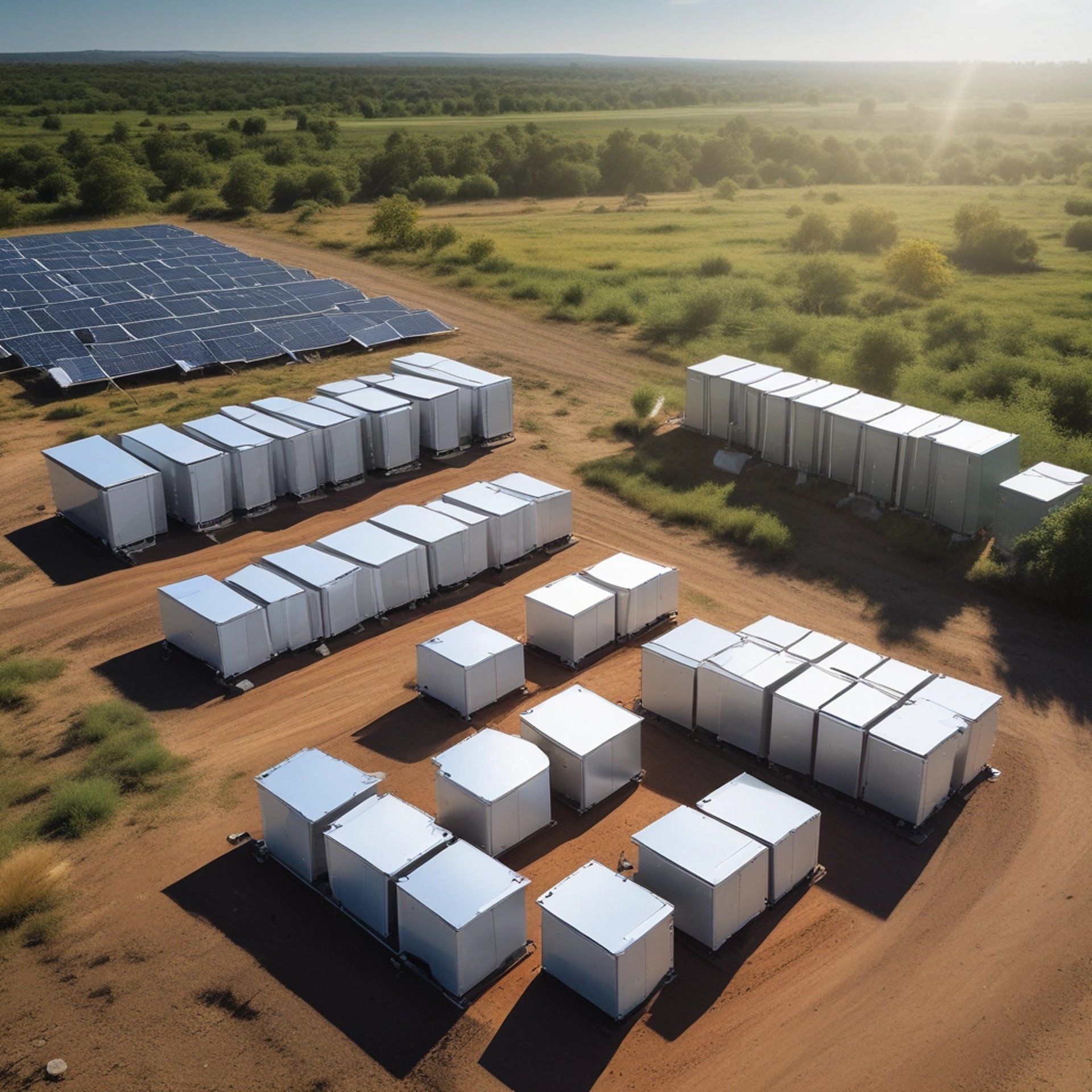
Storage Solves Physics — Oversupply Is an Economic Problem
Batteries are exceptional at solving electrical mismatches:
frequency regulation
short-duration imbalance
peak shaving
intraday shifting
Oversupply is different.
Oversupply is what happens when total production exceeds monetizable demand over extended periods. It is economic, not electrical.
You can shift energy a few hours forward.
You cannot shift months of excess production into markets that don’t exist.
As argued in The Grid-First Fallacy, treating the grid as the ultimate sink for all energy misunderstands abundance. Storage optimizes the grid. It does not create buyers.
Why More Storage Often Increases Curtailment
This sounds counterintuitive, but it is observable.
When storage is added at scale:
short-term volatility decreases
price spreads compress
arbitrage margins shrink
The result is lower revenue per cycle, not higher.
Storage competes with itself.
As more batteries chase the same intraday spreads, returns collapse. Once spreads flatten, batteries simply cycle energy into the same oversupplied windows.
Curtailment doesn’t disappear.
It moves.
This is the same dynamic described in Why Debt Is the Real Enemy of Renewable Projects: tools designed for stability break when markets become saturated.
Storage Does Not Create a Revenue Floor
The critical failure of storage-only solutions is this:
They do not establish a revenue floor.
Storage still depends on:
grid prices
market spreads
dispatch permissions
When prices go to zero, storage has nothing to arbitrage.
When congestion persists, storage cannot export value elsewhere.
As explained in Flexible Monetization Is the New Baseload, stability in abundant systems comes from optionality — the ability to choose where value is realized.
Storage does not add a new exit.
It optimizes the same one.
Seasonal Oversupply Breaks the Storage Thesis
Short-duration batteries work in hours.
Oversupply increasingly occurs in:
weeks
months
seasons
Solar-heavy regions face multi-month surplus. Wind-heavy regions face extended low-demand periods. No economically viable battery system can absorb seasonal excess without prohibitive capital cost.
This is why, as shown in Renewables Without Bitcoin Are Financially Broken Assets, projects with only grid and storage exposure face structural repricing.
The problem is not battery efficiency.
It is time.
Why Storage Makes Financial Fragility Worse When Leveraged
Storage increases capex.
For leveraged projects, that matters.
More capital means:
higher debt service
tighter covenants
less flexibility
When oversupply persists, storage-heavy projects are forced sellers with larger fixed obligations.
This amplifies the risk identified in Why Debt Is the Real Enemy of Renewable Projects: rigidity layered on volatility accelerates failure.
Storage smooths electrons.
Debt demands cash.
Storage Does Not Address the Social and Environmental Backlash
Oversupply is not only a market problem.
It is a social one.
When energy is curtailed while landscapes are altered, communities question legitimacy. Permitting becomes harder. Political resistance grows.
As discussed in The End of Passive Green Assets and Why Restoration Will Become a Hard Requirement for Energy Assets, systems that change land without repairing it face rising friction.
Storage does nothing to fund restoration.
It consumes capital that could.
The Missing Layer: Flexible, Non-Grid Monetization
The failure of storage-only thinking is the assumption that all value must flow through the grid.
It does not.
Oversupply is solved only when energy can:
exit the grid
monetize independently
scale dynamically
shut down without penalty
This is why Bitcoin Mining Is Not a Business — It’s a Control System reframes mining as a stabilizing layer. It absorbs surplus when markets cannot and releases pressure when they can.
Storage and mining do not compete.
They operate on different dimensions.
Storage shifts time within the grid
Mining shifts value outside the grid
Together, they form a complete system. Alone, storage cannot.
Why Oversupply Is a Feature, Not a Bug
Oversupply is the inevitable outcome of successful decarbonization.
Trying to eliminate it with storage is like trying to eliminate traffic with wider roads. It delays congestion, then intensifies it.
As argued in Why the Energy Transition Must Become Regenerative — Not Just Renewable, mature systems don’t try to suppress abundance. They design around it.
Designing around abundance requires:
flexible demand
alternative value sinks
patient capital
restoration pathways
Storage is one tool.
It is not the architecture.
Conclusion: Storage Is Necessary — But It Will Never Be Enough
Energy storage is essential.
It will continue to scale.
It will remain standard.
But it will never fix oversupply on its own.
Oversupply is not a physics problem.
It is a systems problem.
Until energy systems add:
non-grid exits
revenue floors
flexible monetization
restoration funding
curtailment will rise, assets will reprice, and storage will chase diminishing returns.
The solution is not more storage.
It is better system design.
Contact
© 2025 Entropy888. All rights reserved.
Powered by Renewable Energy.
Christos Boubalos - Business Development Lead +306972 885885 mob/whatsapp
christos@entropy888.com
-------------------------------------------
General Enquiries - info@entropy888.com