
Designing Energy Systems for Optionality, Not Efficiency
For decades, energy projects were designed around one dominant objective: efficiency. Lower LCOE. Higher utilization. Maximum output. In a stable world, this logic worked. In today’s energy landscape, it increasingly fails. As explored in Bitcoin Mining Is Not a Business — It’s a Control System, modern energy systems are no longer optimized environments — they are volatile, non-linear systems. In such systems, efficiency does not create resilience. It creates fragility. The winning design principle is no longer efficiency. It is optionality.
SYSTEM DESIGN & OPTIONALITY
Chris Boubalos
1/5/2026
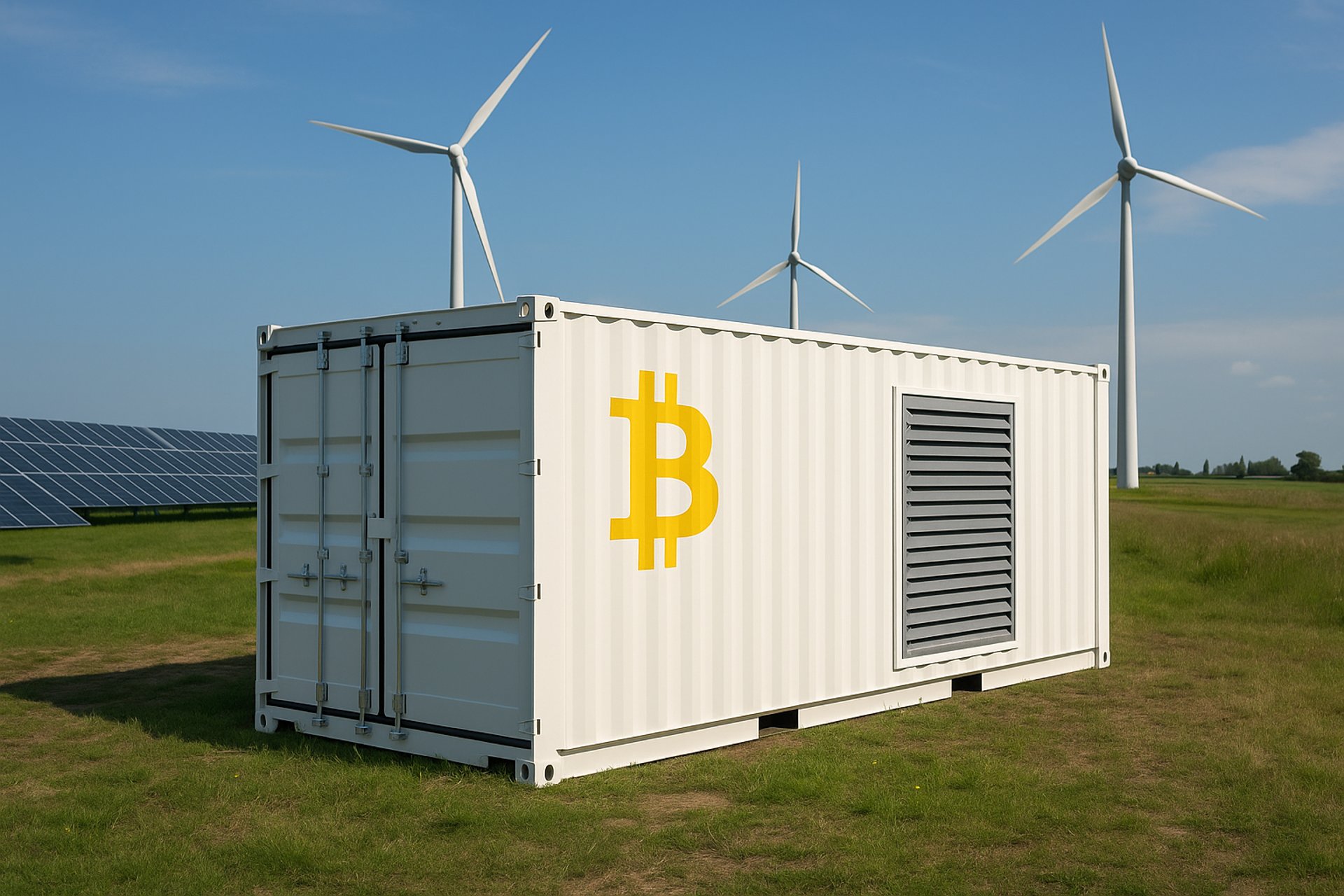
Efficiency Assumes Stability
Efficiency is a local optimization strategy.
It assumes:
predictable demand
stable pricing
continuous offtake
limited volatility
Under these assumptions, squeezing out every marginal gain makes sense.
But renewable-dominant energy systems violate all of them.
Prices swing violently.
Demand does not follow production.
Curtailment becomes structural.
Political and regulatory intervention increases.
In such an environment, efficient systems break first.
Optionality Is a System-Level Property
Optionality is not about doing things better.
It is about being able to choose differently when conditions change.
An optional system can:
delay monetization
redirect output
shut down without penalty
convert surplus into alternative value
As discussed in Why Cheap Energy Is a Liability Without Flexible Monetization, energy without optionality becomes a financial trap. The cheaper it gets, the faster value collapses when the outlet disappears.
Optionality prevents this collapse.
Why Highly Efficient Systems Fail Under Abundance
Efficiency pushes systems toward:
full utilization
tight coupling
single revenue paths
These characteristics maximize output — but eliminate flexibility.
When surplus appears, efficient systems:
cannot turn down
cannot wait
cannot reroute
cannot absorb volatility
They flood constrained markets, collapse prices, and destroy their own economics.
This is why, paradoxically, the most efficient assets often perform the worst in high-renewable environments.
Optionality Replaces Baseload Logic
Historically, baseload generation provided certainty.
It ran continuously, anchoring the system.
As explained in Flexible Monetization Is the New Baseload, this role has shifted.
Stability no longer comes from constant production.
It comes from constant monetization choice.
Optionality is the mechanism that enables this shift.
An optional system does not need to run at all times.
It needs to remain economically viable at all times.
Designing for Optionality: Core Principles
Designing for optionality requires abandoning several ingrained assumptions.
1. Multiple Exit Paths
Grid export should never be the only monetization route.
At least one alternative path must exist that is:
price-insensitive
instantly callable
interruptible
2. Interruptibility by Design
Systems must be able to shut down without financial or technical penalty.
If turning off causes losses, the system is brittle.
3. Monetization Over Optimization
Value capture matters more than marginal efficiency gains.
A less efficient system that survives volatility outperforms a highly efficient one that collapses.
4. Control at the Edge
Optionality works best when implemented close to generation — behind the meter, not downstream.
Bitcoin Mining as an Optionality Layer
Bitcoin mining fits this design framework precisely.
It is not introduced to maximize revenue, but to:
absorb surplus instantly
disappear instantly
monetize energy independent of grid conditions
Mining provides what efficient systems lack:
a reversible economic pathway.
As outlined in Bitcoin Mining Is Not a Business — It’s a Control System, this makes mining a structural component of system design — not an auxiliary business.
Why Optionality Beats Forecasting
Many systems attempt to manage volatility through forecasting.
But forecasting:
assumes patterns persist
fails under structural change
cannot eliminate uncertainty
Optionality does not predict the future.
It remains functional regardless of it.
This is the key difference between fragile and resilient systems.
The Cost of Ignoring Optionality
Projects designed purely for efficiency increasingly face:
chronic curtailment
revenue instability
political dependency
forced renegotiations
In contrast, optional systems:
stabilize cash flows
gain negotiating leverage
reduce exposure to policy shocks
preserve long-term value
Optionality is not insurance.
It is architecture.
The Entropy888 Design Approach
At Entropy888, energy systems are designed around optionality as a primary objective.
Efficiency is treated as a secondary constraint — never as the governing principle.
Flexible monetization layers, including Bitcoin mining, are integrated to ensure the system can always choose when and how value is realized, regardless of grid conditions or market volatility.
The objective is not peak performance.
It is persistent viability.
A Redefined Measure of Success
The right question is no longer:
“How efficient is this system?”
It is:
“How many options does this system retain when conditions deteriorate?”
Systems fail not because they are inefficient —
but because they run out of options.
Conclusion: Efficiency Is Local, Optionality Is Survival
Efficiency optimizes for known conditions.
Optionality prepares for unknown ones.
In an energy landscape defined by abundance, volatility, and uncertainty, survival belongs to systems that preserve choice.
The future will not be owned by the most efficient producers.
It will be owned by those who design energy systems that can always decide.
Contact
© 2025 Entropy888. All rights reserved.
Powered by Renewable Energy.
Christos Boubalos - Business Development Lead +306972 885885 mob/whatsapp
christos@entropy888.com
-------------------------------------------
General Enquiries - info@entropy888.com