
Why Renewable Producers Should Build Bitcoin Mining Capacity Into Every New Power Plant by Default
For decades, renewable energy developers were forced to design projects around a rigid rule: “Build only what the grid can absorb.” But the structure of energy markets has changed permanently. Curtailment is rising. Grid upgrades lag behind renewable expansion. Negative pricing events are multiplying. Storage remains expensive and short-duration. Wholesale prices are unpredictable. In this new reality, a renewable plant without flexible monetization is incomplete infrastructure. That is why Bitcoin mining — when powered entirely by renewables — must become a default component of every new power plant’s design. Not an add-on. Not an afterthought. Not a speculative experiment. A standard part of the engineering and financial model. Entropy888 calls this new model Integrated Renewable Mining Design (IRMD) — the future of profitable renewable development.
ENERGY OWNERS & PRODUCERS
Chris Boubalos
12/8/2025
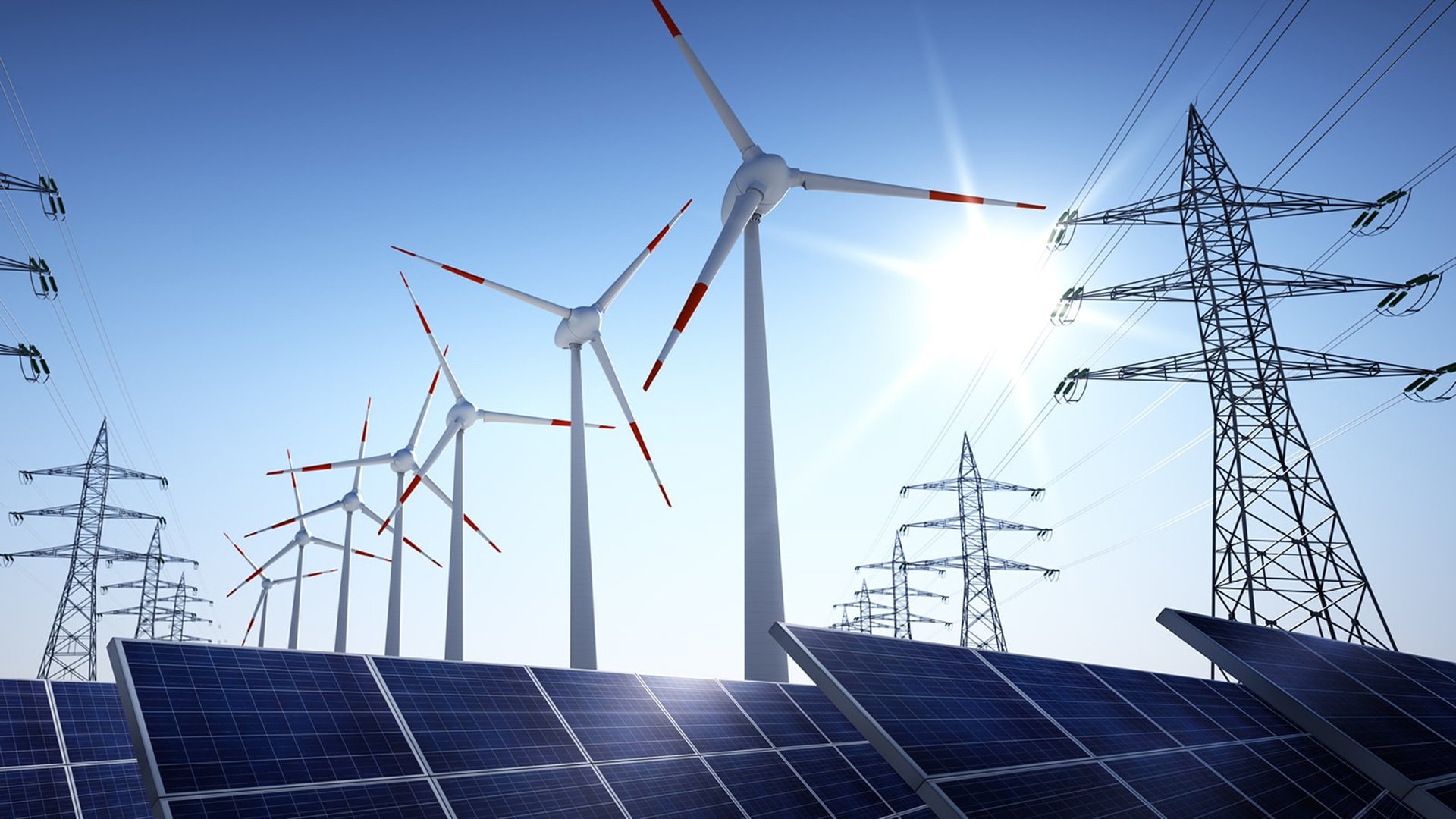
1. Renewable Plants Are No Longer Built for the Grid Alone
Modern renewable power plants face fundamental constraints that did not exist in the fossil era:
• Transmission bottlenecks
TSOs and DSOs cannot expand fast enough to match renewable supply.
• Rising curtailment
Especially in wind-heavy and solar-heavy regions.
• Unpredictable wholesale pricing
Noon solar drops and nighttime wind surges distort markets.
• PPA limitations
Long-term price caps suppress project upside.
• Storage underperformance
Batteries solve minutes—not days or seasons.
Because of these structural realities:
👉 The grid can no longer be the only customer.
Every new renewable plant must include a secondary, flexible buyer:
behind-the-meter Bitcoin mining.
2. Building Mining Capacity by Default Creates Stronger Project Economics
Traditional energy economics rely on:
• selling 100% of output to the grid
• hoping curtailment stays low
• betting on stable wholesale markets
• designing around PPA risk
• absorbing price volatility
This model becomes weaker every year.
By contrast, designing plants with built-in mining capacity unlocks:
A. Full monetization of production (0% wasted energy)
Mining absorbs any surplus instantly.
B. Reduced revenue volatility
Mining creates predictable cashflow even during market crashes.
C. Increased IRR and NPV
Mining substantially improves lifetime project returns.
D. Better land and infrastructure utilization
Transformers, cables, inverters — everything works closer to maximum capacity.
E. More favorable financing conditions
Banks and lenders love diversified revenue structures.
The result:
👉 Every renewable plant becomes a dual-output asset: electricity + Bitcoin.
3. Why Integration Must Happen at the Design Stage (Not Later)
Adding mining after construction is possible —
but far less efficient.
Designing mining capacity from day one ensures:
✔ Optimized electrical architecture
Lines, inverters, and transformers sized for dual-use.
✔ Proper thermal & airflow integration
Mining heat can be recovered or dissipated efficiently.
✔ Land allocation & access roads
Containers or modular mining blocks need designated space.
✔ CAPEX optimization
Mining hardware CAPEX can be structured with project finance.
✔ Better permitting & regulatory alignment
Mining can be listed as an auxiliary industrial load.
✔ Reduced OPEX
Shared infrastructure lowers total cost.
This transforms Bitcoin mining from an external add-on into a core plant function, like storage or grid interconnection.
4. Mining Improves Grid Compatibility and System Stability
Grid operators increasingly demand flexible loads.
Mining provides the perfect solution:
• Instant downward dispatch
Mining shuts off instantly during grid stress.
• Instant upward absorption
Mining consumes surplus when generation spikes.
• Voltage stabilization
Flexible demand reduces volatility.
• Lower curtailment penalties
Mining acts as a buffer for intermittent output.
By absorbing excess production, mining protects the grid and supports higher renewable penetration.
This is a system-level advantage that utilities and TSOs cannot ignore.
5. Future-Proofing Renewable Assets for 20–40 Years
A renewable plant is a 20–40 year investment.
Energy markets will change dramatically during that time:
• EV charging demand patterns
• electrification of industry
• policy shifts
• storage evolution
• carbon pricing
• AI data center growth
• weather variability
• geopolitical disruption
Bitcoin mining future-proofs renewable assets by:
✓ offering long-term revenue independence
✓ providing a flexible monetization layer
✓ insulating the project from price shocks
✓ acting as a hedge against fossil volatility
✓ creating digital reserves (Bitcoin treasury)
✓ enabling expansion and reinvestment
A plant built without mining is structurally less resilient.
6. Mining Allows Intentional Overbuild of Renewable Capacity
One of the most powerful benefits:
👉 Developers can build significantly more capacity than the grid can handle.
Mining absorbs:
• peak solar
• nighttime wind
• seasonal hydro surges
No need to wait for:
❌ grid upgrades
❌ substation expansion
❌ new transmission lines
❌ lengthy regulatory approvals
This accelerates renewable deployment and increases national clean energy capacity.
It is a strategic advantage at both company and country level.
7. Mining Enhances ESG Through Regenerative Funding & Heat Reuse
Far from being an ESG liability, fully renewable-powered mining is a carbon-positive asset:
• Heat reuse
For greenhouses, agriculture, industrial drying.
• Reforestation funding
Part of mining profits directed into ecosystem regeneration.
• Reduced curtailment
More clean energy actually reaches use.
• Improved land stewardship
Forests around power plants strengthen environmental profiles.
Entropy888 has pioneered this regenerative model.
8. The Future Standard: Grid + Storage + Flexible Load Mining
By 2030, the standard EPC design for renewable plants will include:
Generation (solar/wind/hydro)
Grid interconnection
Battery storage
Behind-the-meter Bitcoin mining
Mining is the missing infrastructure block —
the profitable counterpart to storage and grid infrastructure.
Conclusion: Mining Must Become Default Renewable Infrastructure
Renewable power plants built without Bitcoin mining are incomplete.
They rely solely on a grid that is increasingly constrained, slow to expand, and volatile in pricing.
By integrating mining from day zero, developers unlock:
• higher profits
• full energy monetization
• zero curtailment
• predictable cashflow
• faster payback
• long-term resilience
• carbon-positive ESG impact
• strategic optionality
• future-proof design
Entropy888 helps developers and utilities adopt this new model —
where every renewable power plant comes with built-in Bitcoin mining capacity by default.
👉 Build renewables for the grid —
but design them for the future.
Contact
© 2025 Entropy888. All rights reserved.
Powered by Renewable Energy.
Christos Boubalos - Business Development Lead +306972 885885 mob/whatsapp
christos@entropy888.com
-------------------------------------------
General Enquiries - info@entropy888.com