
Valuing Renewable Energy in the Age of Flexibility: Why Static Power Plants Will Be Discounted
For decades, renewable energy assets were valued using a simple logic: Installed capacity × expected production × power price. That model no longer reflects reality. As grids saturate, renewables scale faster than demand, and price volatility increases, static power plants — assets that can only sell electricity to the grid — are becoming structurally inferior. The market is already reacting. The next decade will introduce a clear valuation divide: Static renewable assets will be discounted Flexible, multi-output energy systems will command premiums Flexibility is no longer an operational feature. It is a valuation driver.
ENERGY ECONOMICS
Chris Boubalos
12/16/2025
1. The Old Valuation Model Is Breaking
Traditional renewable valuation assumes:
predictable grid access
stable pricing or PPAs
manageable curtailment
linear revenue growth
In reality, producers now face:
increasing curtailment
negative pricing windows
PPA ceilings that cap upside
grid congestion risks
seasonal oversupply
regulatory uncertainty
These risks are structural, not cyclical.
Assets that cannot respond dynamically are exposed — and markets price that exposure.
2. Flexibility Is Becoming the New Credit Quality
In modern energy finance, lenders and investors increasingly ask:
Can the asset survive price collapse?
Can it monetize surplus without the grid?
Can it operate profitably during oversupply?
Does it have more than one revenue path?
Assets with only one monetization channel are fragile.
Assets with multiple options are resilient.
Flexibility functions like embedded credit enhancement.
3. What Makes a Renewable Asset “Flexible”
A flexible energy asset can choose, in real time, how to deploy its output:
sell to the grid
store short-term in batteries
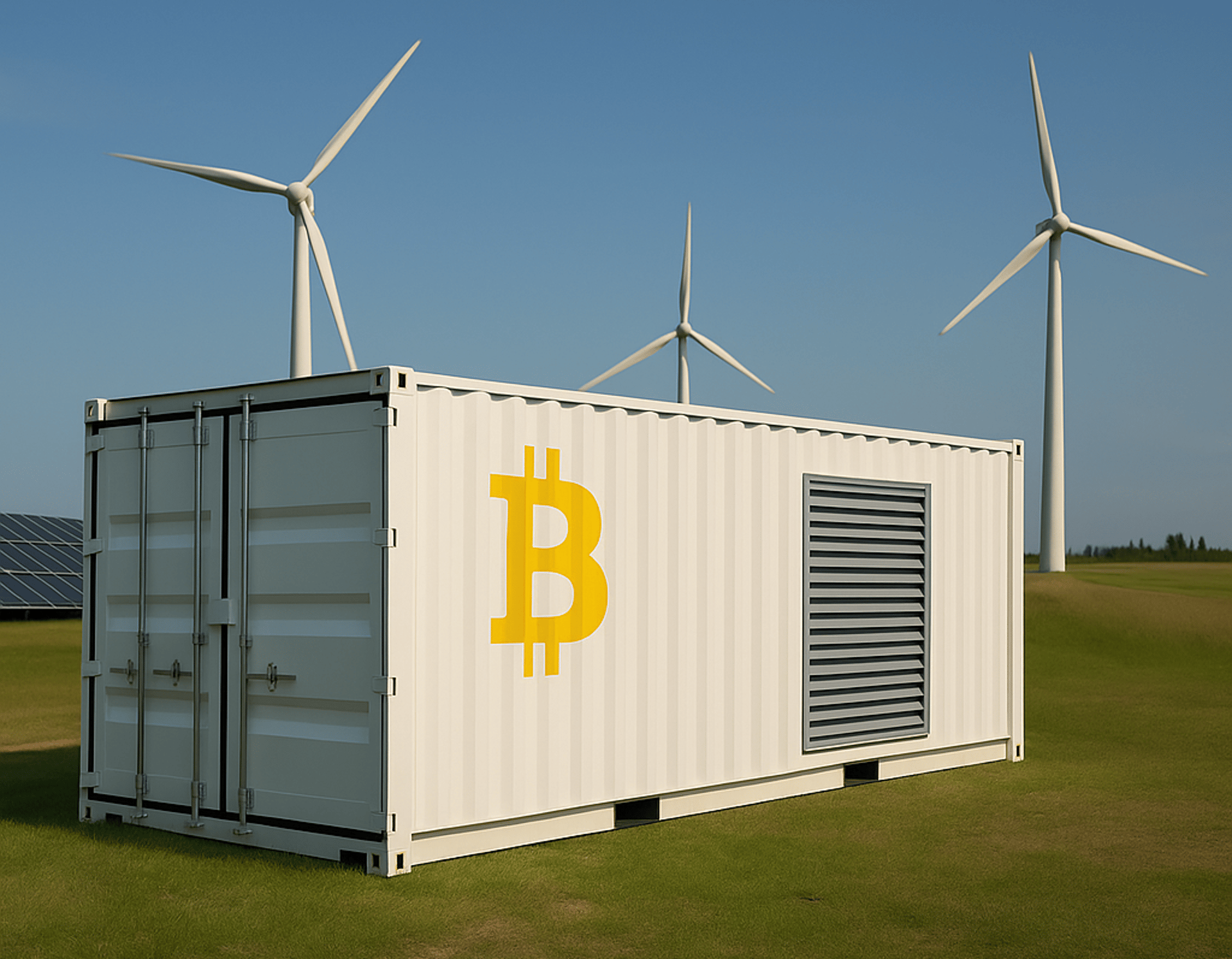
monetize long-term via Bitcoin mining
reduce output strategically
This optionality dramatically reduces downside risk.
And reduced downside risk = higher valuation multiples.
4. Why Bitcoin Mining Changes Valuation Mathematics
Bitcoin mining introduces a monetization path that is:
independent of grid prices
independent of demand cycles
scalable with surplus
instantly dispatchable
long-duration in economic effect
This transforms the asset profile from:
single-output → multi-output
Instead of asking “What price will the grid pay?”,
the owner asks “Where is value highest right now?”
Markets reward that control.
5. Static Assets Become Price-Takers — Flexible Assets Become Allocators
Static renewable plants are forced to accept:
curtailment orders
negative pricing
fixed PPA terms
grid constraints
Flexible assets allocate energy strategically.
They are not price-takers —
they are value allocators.
This distinction mirrors what happened in other industries:
fixed factories vs flexible supply chains
single-cloud systems vs hybrid cloud platforms
The flexible model always wins.
6. The Valuation Gap Will Widen Over Time
As renewable penetration increases, the gap accelerates:
More oversupply → more curtailment
More volatility → lower confidence in static cash flows
More regulation → higher compliance costs
Flexible systems absorb stress.
Static systems accumulate it.
Over time, this shows up in:
lower WACC
higher DSCR
better refinancing terms
stronger exit multiples
The market will not need to be told —
it will price this naturally.
7. Why Batteries Alone Are Not Enough for Valuation Uplift
Batteries improve technical performance, but only partially improve economic resilience.
They help with:
short-term arbitrage
grid services
They do not solve:
multi-hour oversupply
seasonal imbalance
long-duration value preservation
Bitcoin mining fills that gap.
Together, batteries + mining convert volatility into optionality —
and optionality is what valuation models reward.
8. The Emerging “Flexibility Premium”
Over the next decade, expect to see:
higher acquisition multiples for flexible assets
discounted pricing for grid-only plants
preference from infrastructure funds for hybrid systems
stricter financing terms for static projects
Flexibility will be priced like:
location
resource quality
permitting strength
It becomes a core asset characteristic.
9. Entropy888’s View: Build Assets the Market Will Value Tomorrow
Entropy888 does not design projects for today’s valuation models.
We design for the models that will dominate five, ten, twenty years from now.
That means:
embedded flexibility
multiple monetization paths
long-duration value storage
resilience across cycles
Mining is not an add-on.
It is a valuation stabilizer.
Conclusion: The Market Will Not Reward Inflexibility
Renewable energy is no longer scarce.
Flexible renewable energy is.
As markets mature, assets that cannot adapt will be priced accordingly.
The winners will be those who understood early that:
Power plants are no longer valued for what they produce —
but for what they can do when conditions change.
Static assets will be discounted.
Flexible systems will compound.
That is the new reality of renewable valuation.
Contact
© 2025 Entropy888. All rights reserved.
Powered by Renewable Energy.
Christos Boubalos - Business Development Lead +306972 885885 mob/whatsapp
christos@entropy888.com
-------------------------------------------
General Enquiries - info@entropy888.com