
The Risk of Waiting: How Late Movers Will Inherit Broken Energy Economics
Energy abundance is not arriving gradually. It is arriving unevenly, asymmetrically, and faster than institutions can adapt. This creates a dangerous illusion: that countries, utilities, and investors can “wait and see” before deciding how to handle surplus. They cannot. In energy systems, delay does not preserve optionality. It destroys it.
ENERGY CONTROL SYSTEMS
Chris Boubalos
2/2/2026
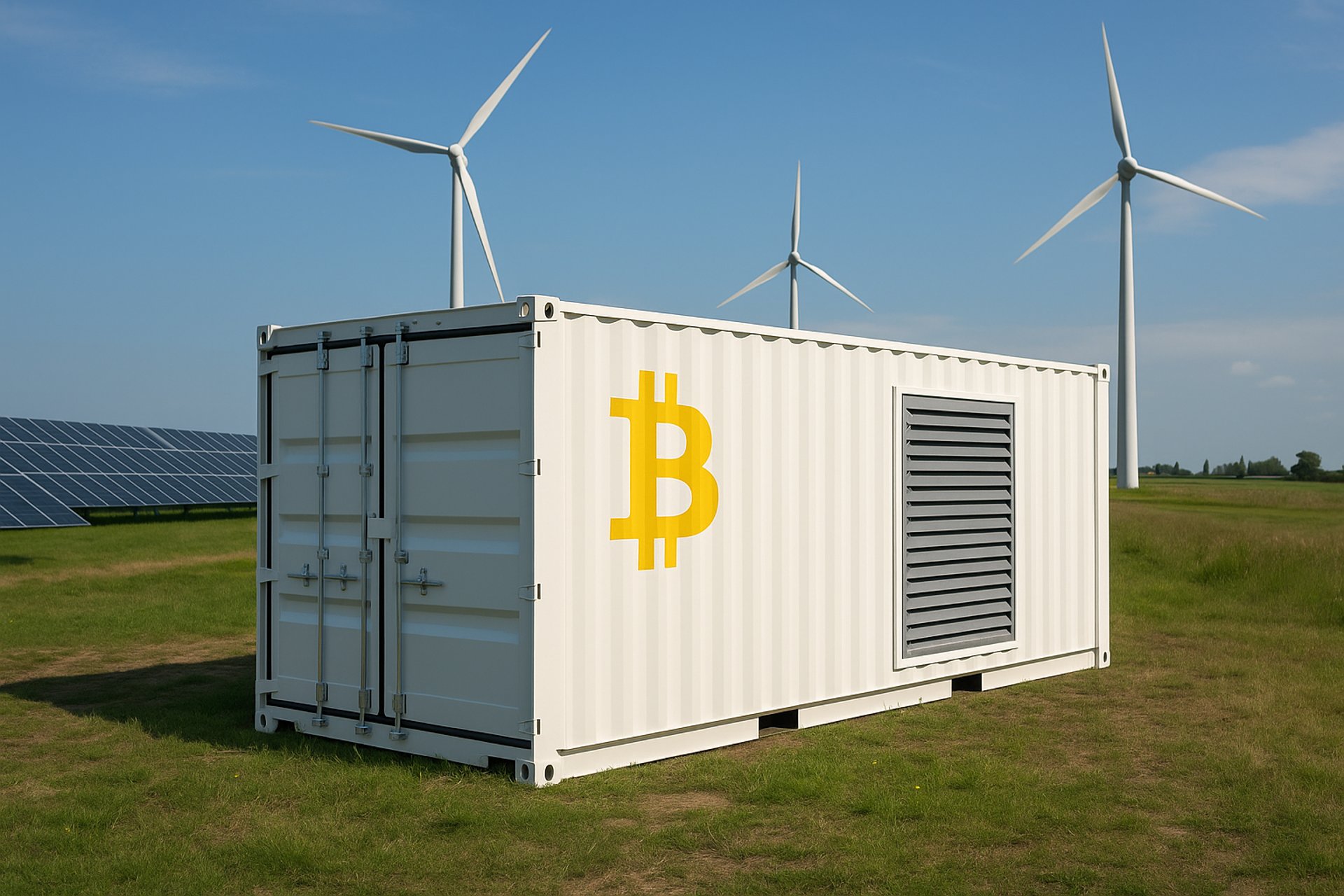
Abundance Does Not Pause While Governance Catches Up
Renewable capacity is scaling faster than:
grid expansion
regulatory reform
market redesign
The consequences are already visible:
rising curtailment
collapsing peak prices
underperforming assets
growing political backlash
Waiting does not stabilize the system.
It locks in failure modes.
Early Movers Shape the Rules — Late Movers Inherit Them
In every structural transition, early adopters do more than earn returns.
They define:
technical standards
regulatory language
acceptable architectures
political narratives
Late movers do not choose freely.
They inherit frameworks designed elsewhere — often optimized for conditions they no longer control.
Energy surplus governance is already becoming such a domain.
The Bitcoin Price Concern (And Why It Is a False Problem)
One of the most common reasons for hesitation is simple and understandable:
“What if Bitcoin prices fall?”
This concern sounds rational — but in the context of surplus monetization, it is largely misplaced.
Why?
Because Bitcoin price cycles and mining economics move together.
When Bitcoin prices decline:
mining margins compress
miner prices fall sharply
network difficulty eventually adjusts
In other words, CAPEX adapts downward.
Mining has one of the fastest capital repricing mechanisms of any industrial activity. Hardware prices do not remain fixed while revenues fall — they reset.
This makes Bitcoin mining fundamentally different from:
grid infrastructure
batteries
transmission investments
Those assets lock in cost at the worst possible moment.
Mining does not.
Why Volatility Is Not the Risk People Think It Is
Bitcoin volatility looks dangerous when mining is treated as a standalone business.
But surplus mining is not a business.
It is a conversion layer.
When energy would otherwise be:
curtailed
sold at zero
dumped at negative prices
even lower Bitcoin prices still represent value preservation, not speculation.
As argued in Why Energy Systems Need Sinks, Not Just Buffers, the purpose of a sink is not to maximize price — but to prevent value collapse.
From that perspective:
volatile revenue > zero revenue
cyclical pricing > permanent waste
This is a structural distinction many late movers miss.
Delay Turns a Solvable Question Into a Structural Loss
Those who wait for “perfect conditions” face a paradox:
By the time Bitcoin volatility feels comfortable,
curtailment is already structural
prices are already suppressed
assets are already underperforming
political resistance has already formed
At that stage, surplus monetization becomes harder, not easier.
Delay does not reduce risk.
It transfers risk into the system itself.
Early Movers Capture Optionality — Late Movers Lose It
Early movers gain three advantages:
1. Capital Efficiency
They deploy when hardware prices are lowest relative to system need.
2. Institutional Learning
They gain operational experience before rules harden.
3. Narrative Control
They define surplus monetization as stabilization, not speculation.
This is the compounding advantage described in Beyond Energy Independence: How a State / Country Can Turn Renewable Abundance Into National Capital.
Waiting Is a Bet Against Physics, Not Bitcoin
The real bet is not on Bitcoin prices.
It is on whether:
curtailment will reverse
grids will magically absorb everything
surplus will disappear
None of these are supported by energy system physics.
Energy abundance is driven by:
cost curves
deployment momentum
decarbonization mandates
Bitcoin price cycles do not change that.
The Role of Entropy888
Entropy888 operates precisely in the window where hesitation is most costly.
Its role is not to predict Bitcoin prices, but to help energy owners and public authorities:
design grid-first, surplus-only architectures
size systems conservatively around curtailment, not speculation
deploy flexible sinks that preserve value across cycles
avoid CAPEX lock-in at the wrong moment
In this context, Bitcoin volatility is not a threat.
It is a normalizing mechanism.
The Strategic Question Is Simple
Every energy-abundant country, utility, or investor faces the same choice:
wait for certainty and inherit broken energy economics, or
act early and shape the system while optionality exists
Those who move first do not need perfect prices.
They need correct architecture.
Conclusion: Volatility Punishes Hesitation, Not Design
Bitcoin price volatility is real.
But treating it as a reason to delay surplus monetization is a mistake.
Mining costs adjust.
Difficulty adjusts.
Hardware reprices.
What does not adjust is:
wasted energy
stranded assets
lost legitimacy
missed opportunity
The real risk is not volatility.
The real risk is waiting until abundance has already broken the system.
Those who take the step early will not just participate.
They will be the winners.
Contact
© 2025 Entropy888. All rights reserved.
Powered by Renewable Energy.
Christos Boubalos - Business Development Lead +306972 885885 mob/whatsapp
christos@entropy888.com
-------------------------------------------
General Enquiries - info@entropy888.com