
The New Standard for Renewable Energy: Batteries Were the First Step — Bitcoin Mining Is the Next
For the renewable energy sector, one rule is now widely accepted: If you own renewables, you must also own batteries. Battery storage has become the baseline — the minimum requirement to survive volatility, manage short-term imbalance, and participate in modern grid services. But a new standard is already emerging. The next evolution is clear: If you own renewables and batteries, you will also own Bitcoin mining containers. Not as speculation. Not as a side business. But as core energy monetization infrastructure. This is the new route for renewable producers — and it is arriving faster than most expect.
FLEXIBLE MONETIZATION
Chris Boubalos
12/14/2025
1. Batteries Became Mandatory — But They Were Never the Final Answer
Battery adoption followed a predictable path:
• first as pilots
• then as optional upgrades
• finally as mandatory infrastructure
Today, utility-scale projects without batteries are increasingly seen as incomplete.
Batteries solved one specific problem:
short-term volatility.
They help with:
✓ frequency regulation
✓ ramp smoothing
✓ minutes-to-hours energy shifting
✓ ancillary services
But batteries do not solve:
✘ multi-hour curtailment
✘ multi-day oversupply
✘ seasonal imbalance
✘ negative pricing cycles
✘ structural grid congestion
In other words:
Batteries stabilize the grid —
but they do not stabilize project economics.
That gap is now impossible to ignore.
2. The New Reality: Renewable Oversupply Is Structural
As renewable penetration rises, every market experiences the same symptoms:
• midday solar price collapse
• nighttime wind oversupply
• curtailment as standard practice
• grid congestion becoming chronic
• PPAs capping upside
• wholesale volatility increasing
This is not a temporary phase.
It is the natural state of high-renewable systems.
Once this is understood, a new question becomes unavoidable:
What absorbs renewable energy when the grid and batteries cannot?
The answer is not more batteries alone.
The answer is flexible, monetizing demand.
3. Why Bitcoin Mining Is the Natural Next Layer
Bitcoin mining has properties that make it fundamentally different from any other load:
✓ instant on/off
✓ no ramp penalties
✓ no minimum runtime
✓ infinite demand scalability
✓ behind-the-meter deployment
✓ no dependency on grid pricing
✓ works with all renewable types
✓ profitable during oversupply
✓ indifferent to time of day or season
This makes mining the perfect complement to batteries.
If batteries are the shock absorbers,
mining is the pressure release valve.
4. The New Hierarchy of Renewable Infrastructure
The evolution is clear and sequential:
Phase 1 — Renewables only
Grid-dependent, volatile, curtailment-prone.
Phase 2 — Renewables + Batteries
Grid-stable, but still economically exposed.
Phase 3 — Renewables + Batteries + Bitcoin Mining
Grid-stable and economically resilient.
This third phase is where the industry is heading.
Projects that stop at Phase 2 will be outperformed.
5. What Mining Does That Batteries Never Will
Batteries store energy for later use.
Mining stores the value of energy for later monetization.
This distinction is critical.
Mining absorbs:
• multi-hour surplus
• multi-day oversupply
• seasonal production peaks
• structural curtailment
And converts them into:
• immediate revenue
• digital reserves
• long-duration economic storage
• balance-sheet strength
No physical storage system can do this efficiently at scale.
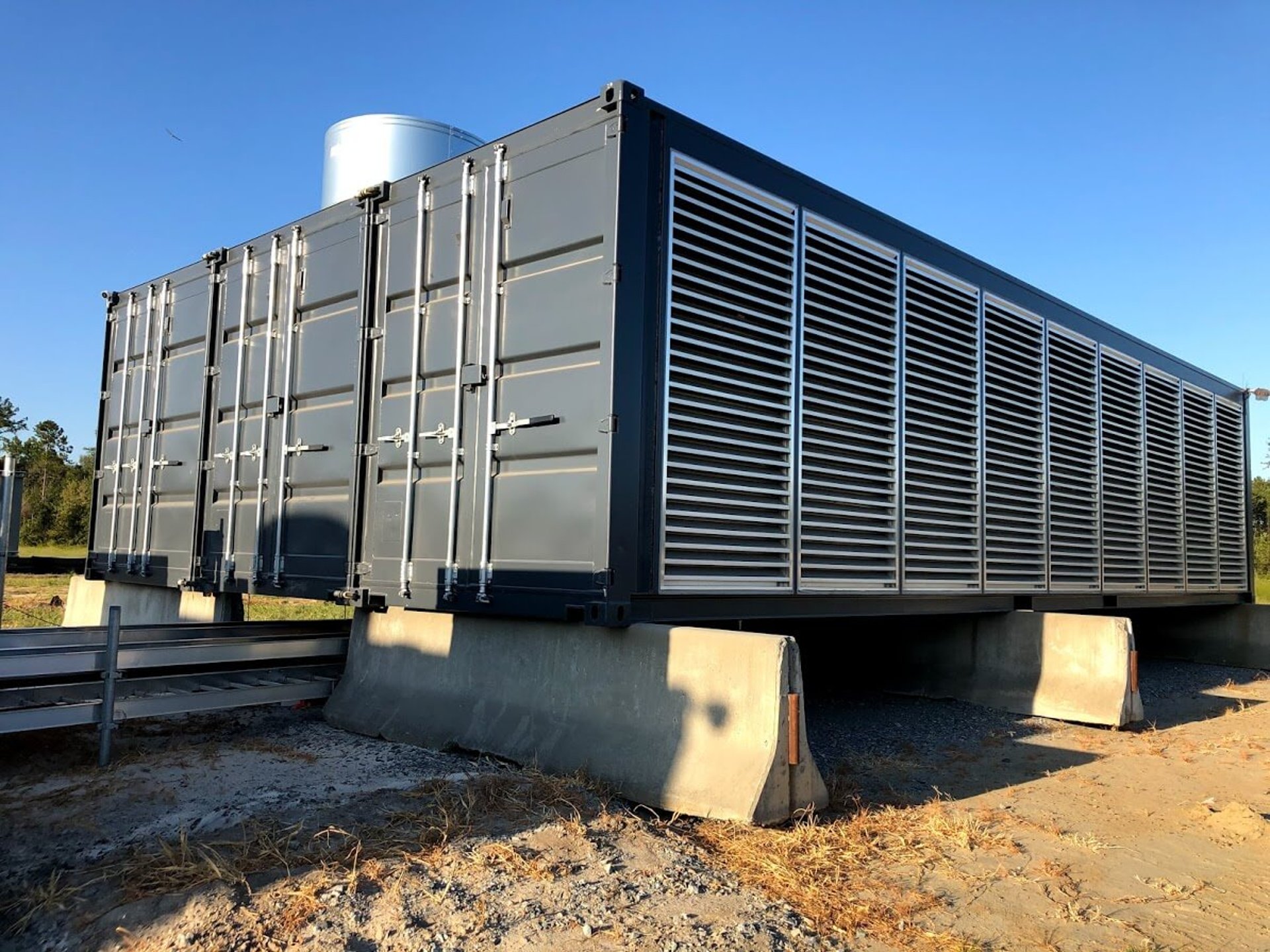
6. Mining Containers: The New Standard Module
Just as battery containers became standard infrastructure units,
mining containers are becoming the next standard block.
They are:
• modular
• relocatable
• scalable in MW increments
• deployable behind the meter
• fast to install
• easy to automate
• compatible with hybrid campuses
In the same way that EPCs now design projects assuming batteries,
they will soon design projects assuming mining blocks.
7. Why This Changes Who Wins in Renewable Energy
Producers who adopt mining:
✓ eliminate curtailment
✓ neutralize negative pricing
✓ stabilize cash flows
✓ unlock overbuild strategies
✓ improve IRR and NPV
✓ gain treasury optionality
✓ future-proof assets
✓ gain strategic independence from the grid
Producers who don’t:
✘ remain price-takers
✘ rely entirely on grid timing
✘ suffer volatility cycles
✘ cap upside permanently
The gap will widen with every year of higher renewable penetration.
8. Mining Is Not Competing With Batteries — It Completes Them
This is not an “either/or” decision.
• Batteries handle seconds to hours
• Mining handles hours to seasons
Together they form a complete system:
Technical stability + economic stability
Without mining, batteries are financially stressed.
With mining, batteries become easier to justify and faster to pay back.
9. The Emerging Industry Norm
The new norm for serious renewable operators will be:
Renewable generation
Battery storage
Behind-the-meter Bitcoin mining
Intelligent control systems
Optional heat reuse
Treasury strategy
Anything less will be considered incomplete infrastructure.
This shift will feel obvious in hindsight —
just like batteries do today.
Conclusion: The Next Competitive Baseline
The old rule was:
Own renewables.
The newer rule became:
Own renewables and batteries.
The next rule is already forming:
Own renewables, batteries, and Bitcoin mining containers — or be structurally disadvantaged.
Bitcoin mining is not the future because it is trendy.
It is the future because it solves a problem batteries cannot.
And in energy systems,
whatever solves the real problem becomes the standard and we can guide you all the way at Entropy888.
Contact
© 2025 Entropy888. All rights reserved.
Powered by Renewable Energy.
Christos Boubalos - Business Development Lead +306972 885885 mob/whatsapp
christos@entropy888.com
-------------------------------------------
General Enquiries - info@entropy888.com