
The Inevitability Curve: Why Renewable Energy, Storage, and Bitcoin Mining Will Converge Into One System
Every major infrastructure transition follows the same pattern: Initial innovation (renewables) Stabilization layer (batteries) Economic optimization layer (flexible monetization) The renewable energy sector is now entering stage three. The convergence of: renewable generation battery storage and Bitcoin mining is not a trend, not a theory, and not a niche strategy. It is inevitable.
ENERGY CONTROL SYSTEMS
Chris Boubalos
12/17/2025
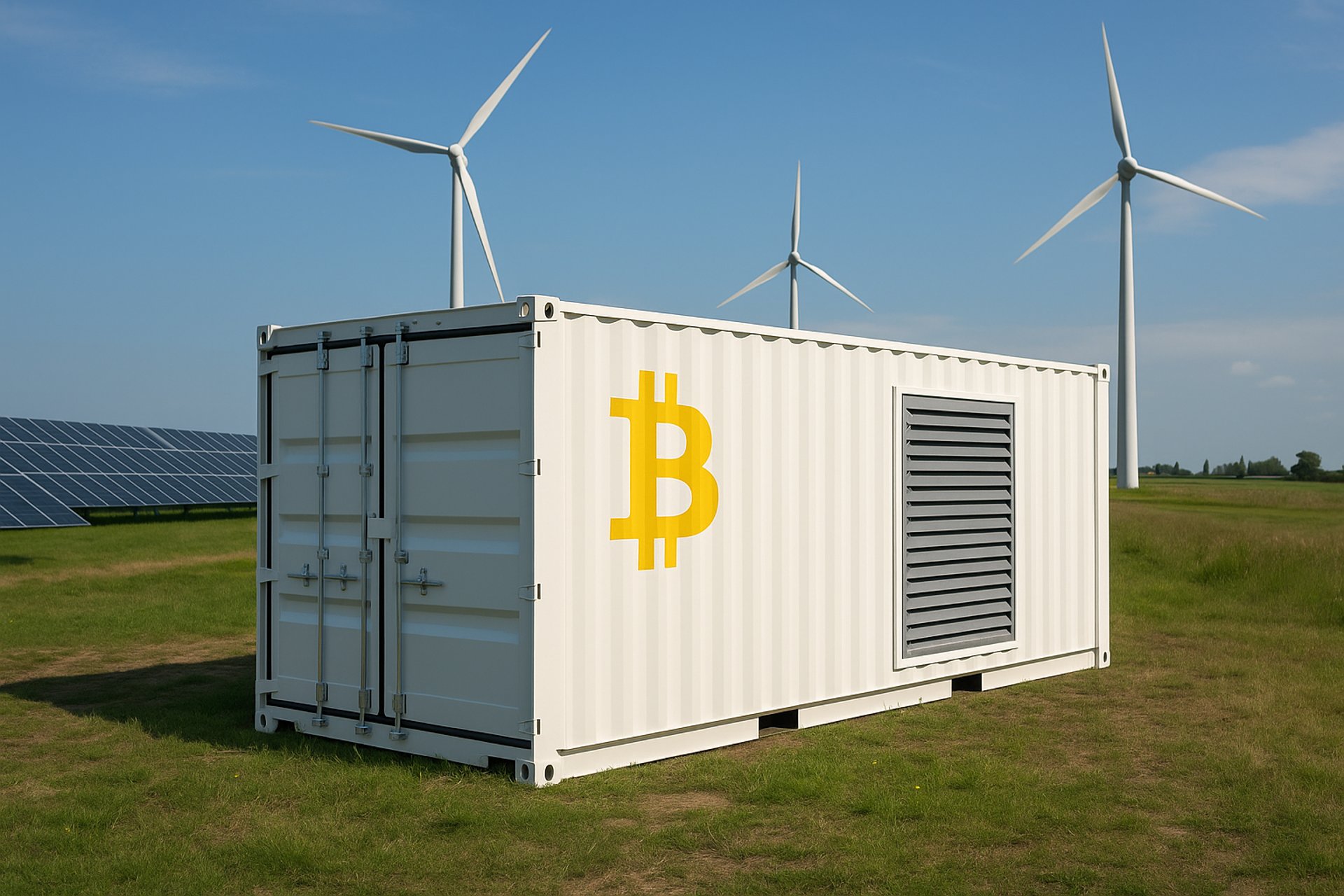
1. Renewable Energy Created Abundance — And Abundance Changed the Problem
For decades, energy was scarce.
The grid was designed to distribute limited supply.
Renewables flipped the equation.
Now the dominant challenge is not production —
it is what to do with excess energy.
Abundance creates new problems:
oversupply
price collapse
curtailment
wasted capital
underutilized infrastructure
History shows that whenever abundance appears,
systems evolve to monetize it.
2. Batteries Were the First Necessary Response
Batteries emerged as the obvious first solution:
They addressed:
short-term volatility
grid stability
frequency response
And they quickly became mandatory.
Today, a renewable project without batteries feels incomplete.
But batteries were never designed to solve:
multi-hour surplus
multi-day imbalance
seasonal overproduction
long-term value preservation
They stabilized the system —
they did not optimize it.
3. Every Energy System Eventually Needs a Value Sink
In economics, abundance without a value sink leads to collapse.
Markets respond by introducing mechanisms that:
absorb excess
preserve value
smooth cycles
prevent waste
In energy systems, Bitcoin mining has emerged as that value sink.
Not because of ideology —
but because it fits the problem perfectly.
4. Why Bitcoin Mining Fits the Role No Other Load Can
Bitcoin mining has characteristics no other demand source combines:
elastic demand at any scale
instant dispatchability
no minimum runtime
no geographic dependency
no reliance on local demand
no price sensitivity to electricity markets
ability to monetize surplus indefinitely
It absorbs energy when nothing else can.
This makes it the natural economic complement to renewables.
5. Convergence Always Follows Function, Not Opinion
No regulator, CEO, or market committee decided that:
data centers would follow fiber
ports would follow trade routes
factories would follow power availability
They converged because function demanded it.
The same is happening now:
renewables create surplus
batteries smooth volatility
mining absorbs what remains
This convergence is driven by physics and economics —
not by narratives.
6. The Three-Layer Energy Stack of the Future
The future energy system will standardize around three layers:
Layer 1 — Production
Solar, wind, hydro, geothermal.
Layer 2 — Stabilization
Batteries and fast-response systems.
Layer 3 — Monetization
Flexible loads, led by Bitcoin mining.
Remove any layer, and the system underperforms.
This is not optional architecture.
It is minimum viable infrastructure.
7. Why Resistance Will Fade Quickly
Every transition faces resistance — until the economics become obvious.
The same happened with:
renewables replacing fossil fuels
batteries entering grid design
digital trading replacing manual markets
Mining will follow the same path.
Once producers see that:
curtailment disappears
cash flows stabilize
IRR improves
grid risk declines
opposition turns into adoption.
And adoption turns into standardization.
8. The Cost of Waiting Will Be Structural Disadvantage
Energy producers who delay integration will face:
lower utilization rates
higher exposure to price crashes
weaker negotiating power
discounted asset valuations
slower expansion capability
Meanwhile, integrated operators will:
compound advantages
reinvest faster
scale beyond grid limits
This creates a permanent performance gap.
9. Entropy888’s Perspective: Design for the Inevitable
Entropy888 does not ask:
“Should mining be included?”
We ask:
“How do we design systems assuming it will be?”
Because once convergence is inevitable,
the only remaining question is who is early and who is late.
Conclusion: The System Is Already Deciding
The convergence of renewables, batteries, and Bitcoin mining is not a future scenario.
It is already happening — quietly, economically, structurally.
Energy systems evolve toward:
efficiency
resilience
optionality
full monetization
This convergence satisfies all four.
In the long run, the system always chooses what works.
And this time,
what works is integration.
Contact
© 2025 Entropy888. All rights reserved.
Powered by Renewable Energy.
Christos Boubalos - Business Development Lead +306972 885885 mob/whatsapp
christos@entropy888.com
-------------------------------------------
General Enquiries - info@entropy888.com