
Scaling the National Grid With Flexible Loads: A Blueprint for 100% Renewable Penetration
For more than a century, electricity grids were built around a simple principle: Generation follows demand. Coal, gas, and nuclear plants adjusted output to match consumption. But renewables flipped this logic: Demand must now follow generation — because solar and wind produce when nature decides, not when the grid prefers. This creates a structural challenge for every country seeking deep decarbonization: • solar peaks too sharply • wind surges at night • demand curves don’t align • batteries cover only hours, not days or seasons • transmission networks saturate • curtailment grows every year To reach 80%, 90%, or even 100% renewable penetration, countries need a new infrastructure layer: 👉 Flexible loads A category of controllable demand that absorbs excess renewable production, stabilizes grids, and eliminates curtailment. The most powerful and instantly deployable flexible load available today is: Behind-the-meter, fully renewable-powered Bitcoin mining. This article outlines how flexible loads become the backbone of the future national grid — and how mining accelerates the transition to a fully renewable energy system.
ENERGY CONTROL SYSTEMS
Chris Boubalos
12/10/2025
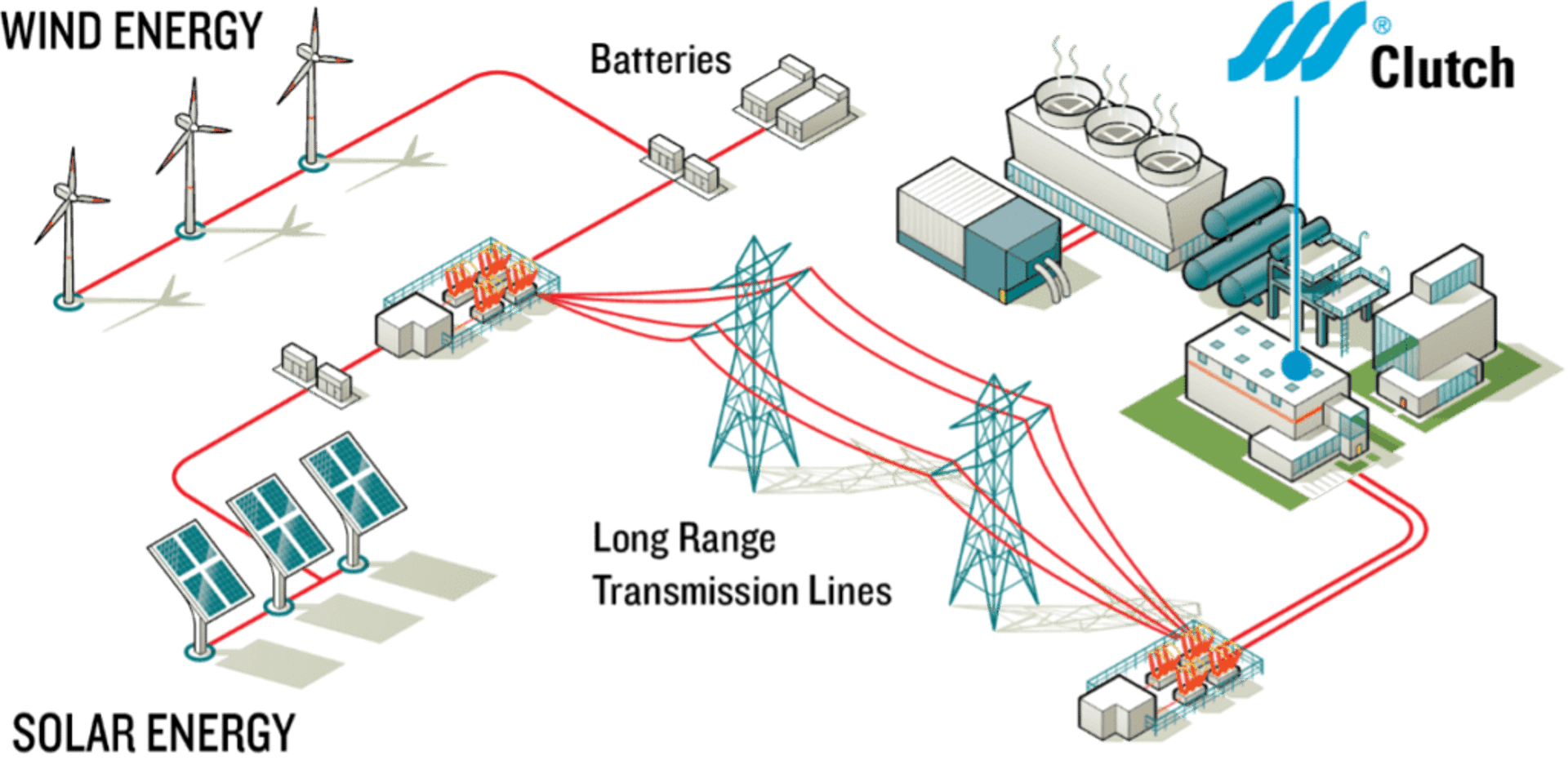
1. The Core Problem: Renewable Surplus Without Flexible Demand
As renewables expand, grids face predictable structural issues:
• Midday solar oversupply
• Night-time wind surges
• Negative wholesale prices
• Transmission congestion
• Multi-hour and multi-day curtailment
• Thermal plants kept online for stability
The bottleneck is not generation — it is lack of flexible consumption.
You can produce limitless renewable power,
but without a flexible load to absorb it, the system becomes unstable.
Batteries alone cannot solve this, because they:
• store hours, not days
• degrade over time
• are capped in capacity
• are too expensive for seasonal balancing
Countries need a flexible load with unlimited demand, instant response, and zero integration friction.
2. Flexible Loads: The Missing Infrastructure Layer
Flexible loads are controllable demand assets that:
✓ turn on when renewable supply is high
✓ turn off instantly when the grid needs capacity
✓ operate outside traditional demand cycles
✓ stabilize frequency and supply-demand balance
Examples include:
• hydrogen electrolysis
• desalination
• industrial heating
• data centers
• Bitcoin mining (the most flexible of all)
Bitcoin mining is uniquely effective because it offers:
• infinite scalability
• instant dispatchability
• direct behind-the-meter integration
• no water use
• no chemical storage
• zero startup delay
• perfect alignment with renewable production patterns
Flexible loads are the key enabler for high renewable penetration.
3. Why Bitcoin Mining Is the Best Flexible Load Technology Available Today
Bitcoin mining has characteristics unmatched by any other industrial process:
1. Instant Up/Down Dispatch (Sub-Second Response)
No industrial load — not steel, not hydrogen, not AI — adjusts faster.
2. Unlimited Absorption Capacity
It can monetize any scale of surplus, from 1 MW to 1,000+ MW.
3. No Ramp Costs
Turning machines on/off carries no penalty.
4. Behind-the-Meter Deployment
Avoids transmission congestion entirely.
5. Geographic Independence
Mining units operate anywhere — mountains, islands, deserts, valleys.
6. No infrastructure dependencies
No need for pipelines, water, chemicals, or heavy logistics.
7. Compatible with all renewable types
Solar, wind, hydro, geothermal.
Mining is not merely “energy-intensive.”
It is a grid-balancing technology disguised as an economic activity.
4. The 100% Renewable Blueprint: How Flexible Loads Transform National Grids
To reach ultra-high renewable penetration, countries must redesign grid architecture around controllable consumption, not controllable supply.
The blueprint:
Step 1: Build Excess Renewable Capacity
Countries aiming for 80–100% renewables must produce far more than average demand.
Flexible loads absorb surges and turn them into value.
Step 2: Deploy Battery Storage for Seconds-to-Hours Balancing
Batteries handle:
• frequency regulation
• short-term shifting
• ramp smoothing
But they must not be burdened with long-duration surplus.
Step 3: Use Bitcoin Mining to Absorb Multi-Hour, Multi-Day, and Seasonal Surplus
This is the critical missing layer.
Mining eliminates:
• curtailment
• negative pricing
• wasted peaks
• reliance on fossil backup
Seasonal hydro peaks?
Wind storms?
Solar oversupply?
Mining monetizes all of them instantly.
Step 4: Increase Transmission Capacity Only Where Required
Because flexible loads reduce congestion, grid upgrades become more strategic and less frequent.
Step 5: Gradually Retire Fossil Peaker Plants
Flexible loads allow:
✓ faster renewable ramping
✓ smoother frequency stability
✓ reduced need for gas turbines
Step 6: Integrate Flexible Loads Into Grid Dispatch Algorithms
TSOs/DSOs treat mining as a “virtual battery” with:
• infinite duration
• instant activation
• no degradation
This is a game-changer for national energy systems.
5. Case Study Logic: Flexible Loads Reduce Grid Costs by Billions
Countries currently spend enormous amounts on:
• curtailment compensation
• capacity markets
• fossil backup procurement
• grid congestion mitigation
• balancing services
• frequency injections
Flexible loads dramatically reduce all of these costs because they:
✓ stabilize supply-demand imbalances
✓ absorb surplus directly at generation sites
✓ reduce pressure on transmission lines
✓ eliminate curtailment payouts
✓ elevate grid reliability
Many countries unknowingly waste giga-watt hours of clean power annually — enough to power entire regions.
Mining converts this waste into strategic assets.
6. Flexible Loads Enable Overbuilding — The Key to 100% Renewables
No country can reach 100% renewable penetration without overbuilding capacity.
But overbuilding only works when flexible loads exist to absorb:
• midday solar peaks
• night-time wind waves
• seasonal hydro bursts
Mining ensures that every watt of overbuild creates revenue.
This flips national energy strategy from conservative to expansive.
7. Mining as a Strategic Asset for National Policy
Forward-looking governments will use mining to:
• stabilize national grids
• monetize stranded or remote renewables
• generate Bitcoin reserves for sovereign wealth funds
• accelerate renewable deployment
• fund environmental restoration
• maximize energy independence
• improve resilience in geopolitical crises
Mining becomes part of national energy security — not a private sector niche.
8. The Future Grid Architecture (2035–2050)
This is the structure that enables true 100% renewable penetration:
Primary Generation:
Solar + Wind + Hydro + GeothermalShort-Term Balancing:
Batteries + flywheelsLong-Duration Monetization:
Bitcoin mining and other flexible loadsIntelligent Dispatch:
AI-based grid managementAdaptive Transmission:
Upgraded selectively, based on needRegenerative ESG Cycle:
Mining profits reinvested in reforestation and biodiversity
This is the grid of the future.
Flexible loads are at its core.
Conclusion: Flexible Loads Are the Blueprint for 100% Renewables
The path to a fully renewable national grid does not depend on:
✘ miracle batteries
✘ unimaginable storage
✘ massive transmission expansion
✘ perpetual fossil backups
It depends on something far simpler:
👉 Controllable, instantly dispatchable, geographically flexible demand.
Bitcoin mining is the most powerful flexible load available today.
It monetizes surplus, stabilizes grids, reduces costs, enables overbuild, and accelerates national decarbonization.
Entropy888 works with utilities, governments, and energy developers to build this next-generation infrastructure — turning renewable volatility into national strength.
👉 If the 20th century grid was built on controllable supply,
the 21st century grid will be built on controllable demand.
👉 This is the path to 100% renewables.
Contact
© 2025 Entropy888. All rights reserved.
Powered by Renewable Energy.
Christos Boubalos - Business Development Lead +306972 885885 mob/whatsapp
christos@entropy888.com
-------------------------------------------
General Enquiries - info@entropy888.com