
Megawatt Economics: How Large Energy Producers Unlock Hidden Revenue Through Bitcoin Integration
Utility-scale renewable operators — solar parks, wind farms, hydro stations, and hybrid energy assets — stand at a turning point. Their core business model is powerful, but increasingly constrained: • curtailment events • rising grid congestion • volatile wholesale pricing • negative-price market hours • PPA limitations • political and regulatory unpredictability At the same time, the renewable sector is scaling faster than grids can absorb. This creates a structural truth: Any producer above ~5–10 MW will inevitably generate periods of underutilized, undervalued, or unsold energy. This is no longer an exception — it is the new normal. Bitcoin mining provides a mathematical, operational, and financial solution to this megawatt bottleneck. Not as speculation — but as energy monetization infrastructure. This is the core of Megawatt Economics: how large renewable producers unlock powerful new revenue by integrating Bitcoin mining into their assets.
ENERGY OWNERS & PRODUCERS
Chris Boubalos
12/3/2025
1. The Megawatt Problem: Renewable Supply Outpaces Grid Demand
Utility-scale assets face predictable inefficiencies:
• Overproduction at non-peak hours
Wind at night. Solar at noon. The grid doesn’t always need the output.
• Curtailment and export limits
Especially in high-renewable penetration regions.
• Market saturation
Wholesale prices collapse during renewable surges.
• Transmission constraints
Many renewable assets sit far from high-load centers.
• PPA inflexibility
Fixed-price contracts that fail to capture real-time value.
These factors reduce revenue even for the most efficient plants.
Bitcoin mining solves this with one simple principle:
👉 It buys every available watt — instantly — with no grid dependency.
2. Bitcoin Mining as a Megawatt Monetization Engine
Large producers benefit from two structural advantages no outsider can replicate:
1. They already own the power.
Mining becomes an extension of existing production.
2. They operate at megawatt scale.
Scaling from 1 MW to 20+ MW is trivial for an energy company.
3. They have infrastructure in place.
Transformers, land, access roads, technicians — everything mining needs.
This enables:
✓ extremely low operating cost
✓ stable margins
✓ multi-year ROI visibility
✓ independence from market pricing
✓ reinforcement of EBITDA
Bitcoin mining turns “volatile megawatts” into “consistent money”.
3. Hidden Revenue: The Value of Monetizing Surplus & Curtailment
Solar, hydro, and wind producers underestimate how much money is left on the table:
• Every curtailment hour = 0 revenue.
Mining converts those hours into profit.
• Every negative-price hour = paying to produce.
Mining converts loss into value.
• Every off-peak cheap hour = selling at a discount.
Mining offers a premium alternative.
• Every structural intermittency = lost capacity.
Mining stabilizes dispatchability.
The producer essentially installs a private market,
one that pays every second and never refuses energy.
4. Behind-the-Meter Mining: The Ultimate Competitive Moat
When large energy producers integrate mining behind the meter:
✓ no transmission fees
✓ no distribution fees
✓ no grid losses
✓ no bureaucracy
✓ no balancing penalties
✓ no network approvals
✓ no market risk
The economics become fundamentally superior.
Producers get the strongest possible conversion:
Megawatt → Bitcoin at internal cost.
No external buyer can match the value of energy converted internally.
5. Mining Creates Strategic Stability for Large Energy Firms
Big producers don’t only want higher revenue —
they want predictable, diversified, resilient revenue.
Mining offers:
• A non-correlated income stream
Electricity markets fluctuate. Bitcoin mining ROI, when energy cost is ultra-low, remains stable.
• A long-term appreciating treasury asset
A portion of mined Bitcoin can be held on the balance sheet.
• A hedge against low-price seasons
Winter hydro peaks, windy nights, sunny afternoons — all become monetizable.
• Asset-backed digital reserves
Energy becomes money, stored indefinitely without degradation.
This is powerful at corporate scale.
6. ESG Benefits: Mining as a Carbon-Positive Catalyst
For utility-scale operators, ESG performance is crucial.
Mining enhances ESG instead of harming it — when powered by renewables:
• Zero-carbon electricity → zero-carbon Bitcoin
A powerful narrative for investors and regulators.
• Heat recycling for agriculture / industry
Large sites can heat:
greenhouses, buildings, industrial drying processes.
• Funding for reforestation and biodiversity
Part of the mining revenue can flow into rewilding programs.
Entropy888’s regenerative model transforms:
Megawatts → Bitcoin → Forests → Better ESG ratings.
No other energy monetization approach offers this triple impact.
7. Scaling Advantage: Large Producers Can Expand Faster
A utility-scale operator can deploy mining at scale with:
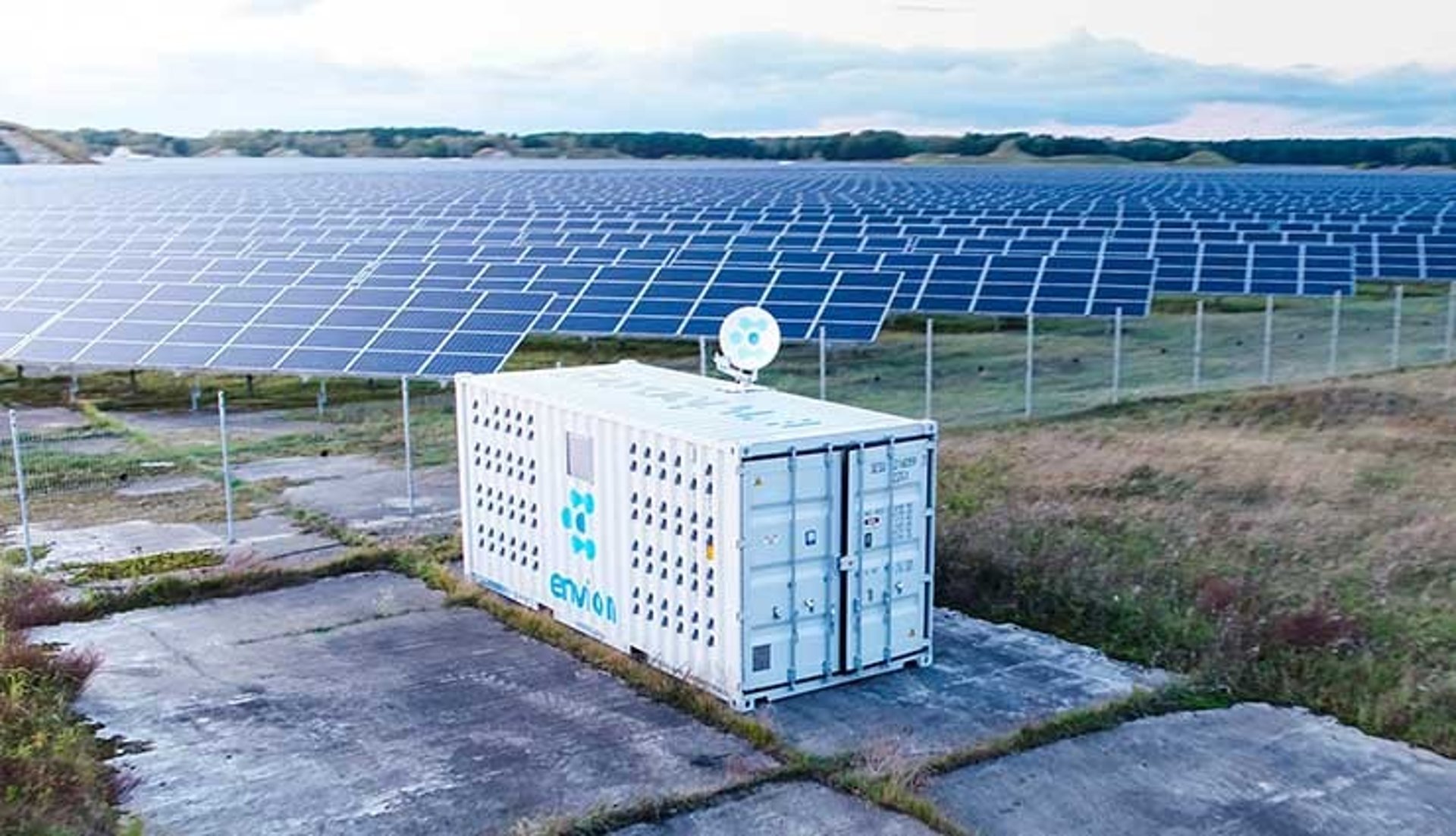
• standardized containerized units
• power blocks in 2–10 MW increments
• direct connection to turbines or inverters
• simple O&M integration
• modular expansion
For a company with 50–500 MW assets, scaling to 5–30 MW mining is easy.
This creates a distinct strategic advantage over independent miners —
who must acquire energy at market rates and cannot scale without heavy extra cost.
Energy producers become the dominant mining class.
8. Integrating Mining Into Multi-MW Infrastructure (Typical Process)
A streamlined deployment for a large producer looks like:
Resource assessment
Identify periods of low-value or unused power.Power block allocation
Dedicate MW-scale blocks for behind-the-meter mining.Containerized mining installation
Fully modular units drop into existing infrastructure.Heat reuse integration (optional)
Greenhouses, agriculture, industrial use.Operational automation
Remote management, AI load balancing.Treasury strategy
Hold a portion of mined Bitcoin as a long-term reserve.ESG reinvestment
Reforestation, land restoration, biodiversity programs.
This is how energy becomes digital wealth — and then environmental value.
Conclusion: The New Economics of Megawatts
Large renewable producers sit on the world’s most valuable raw resource:
clean, low-cost, underutilized megawatts.
Bitcoin mining transforms these megawatts into:
• stable revenue
• strategic treasury assets
• ESG-positive impact
• grid flexibility
• long-term economic independence
• compounding wealth
Entropy888 helps large solar, wind, and hydro producers integrate mining not as speculation,
but as essential energy monetization infrastructure.
👉 The future belongs to those who master their megawatts.
Contact
© 2025 Entropy888. All rights reserved.
Powered by Renewable Energy.
Christos Boubalos - Business Development Lead +306972 885885 mob/whatsapp
christos@entropy888.com
-------------------------------------------
General Enquiries - info@entropy888.com