
Energy Insurance Through Mining: How Flexible Loads Protect Producers From Market Crashes and Demand Shocks
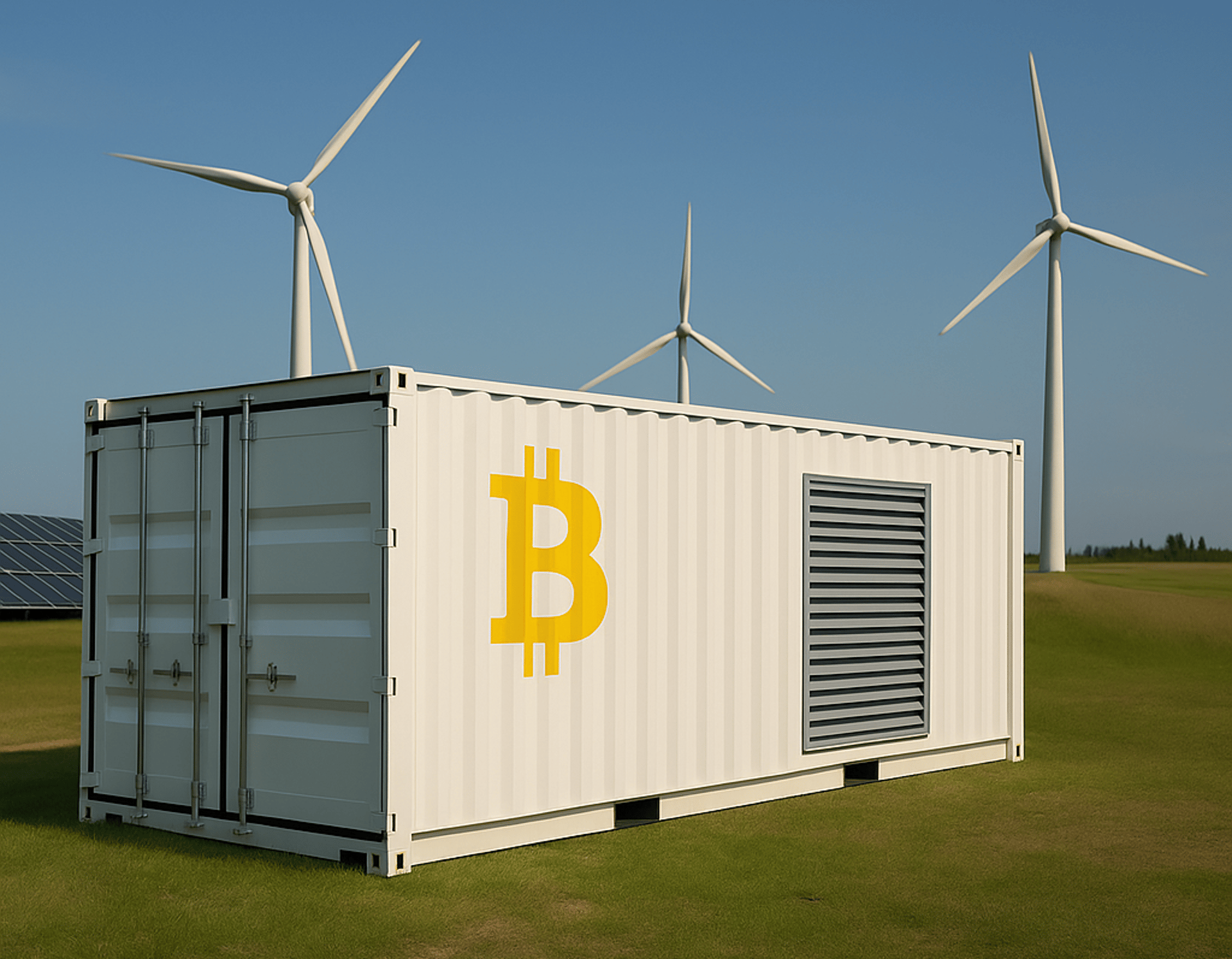
The energy sector has entered a period of extreme volatility. Producers face risks that did not exist a decade ago: • unpredictable spot prices • negative pricing during renewable peaks • curtailment penalties • PPA limitations • sudden drops in industrial demand • geopolitical disruptions • weather-driven volatility • rising costs for balancing services In this environment, traditional hedging mechanisms — PPAs, futures contracts, capacity markets — are no longer enough to stabilize revenue or protect assets. Producers need a new form of insurance. Not financial insurance, but operational insurance built directly into their energy infrastructure. That insurance is: 👉 Behind-the-meter Bitcoin mining as a flexible load. Mining is the only controllable, scalable, instantly dispatchable demand asset capable of protecting producers from price collapses, demand shocks, and curtailment events. Entropy888 calls this emerging model: Energy Insurance Through Mining (EIM) — a structural risk-reduction strategy for the next generation of energy systems.
FLEXIBLE MONETIZATION
Chris Boubalos
12/11/2025
1. The Core Problem: Energy Producers Are Overexposed to Market Volatility
Energy markets are becoming more chaotic due to:
• growing renewable penetration
• supply-demand mismatches
• extreme price swings
• seasonal imbalances
• storage shortages
• unpredictable demand response
• political uncertainty
Traditional risk tools are failing because they only hedge price, not physical surplus.
When a producer has:
• too much generation
• not enough demand
• limited grid absorption
…they are forced into curtailment or negative pricing — a direct loss.
Mining solves this structurally.
2. Bitcoin Mining as Operational Insurance
Bitcoin mining provides a unique form of risk mitigation:
A. A guaranteed buyer for every surplus megawatt
Regardless of price conditions, mining converts excess power into revenue.
B. Instant activation and deactivation
Mining responds in milliseconds — perfect for absorbing volatility.
C. No counterparty risk
Unlike PPAs or industrial customers, mining does not default.
D. No transmission dependency
Behind-the-meter integration bypasses grid congestion entirely.
E. Scalability
Mining capacity can match 1%, 10%, or even 50% of a plant’s output.
F. Works in any market environment
While electricity markets crash or freeze, mining revenue remains independent.
Mining is not speculation —
it is a structural risk control mechanism, comparable to:
• financial derivatives
• reinsurance
• reserve power systems
• capacity buffers
But with one key difference:
👉 Mining pays the producer instead of charging premiums.
3. The Four Risks Mining Protects Against
Risk 1: Price Crashes (Spot Market Collapse)
When spot prices fall — due to oversupply, low demand, or renewable spikes — producers often earn less than OPEX.
Mining bypasses the market completely.
Behind-the-meter load monetizes energy instantly, independent of grid prices.
Risk 2: Curtailment and Negative Pricing
The fastest-growing risk for renewable producers.
Mining eliminates:
✓ curtailment hours
✓ negative price exposure
✓ lost revenue due to grid congestion
✓ need to pay the grid to take power
Every surplus watt becomes value.
Risk 3: Demand Shocks (Industrial or Weather-Driven)
If a major industrial customer shuts down, producers face sudden demand gaps.
Mining fills those gaps immediately.
It becomes a virtual industrial consumer that never stops buying.
Risk 4: PPA Limitations (Ceilings, Volume Caps, and Restrictions)
PPAs protect revenue floors, not ceilings.
Mining protects upside, allowing producers to monetize above-PPA surpluses without renegotiation.
4. Mining as a New Category of Insurance Asset
Mining behaves like a hybrid of:
• Financial insurance
Hedges against market weakness.
• Physical balancing infrastructure
Acts like long-duration storage without degradation.
• Flexible industrial load
Adjusts consumption instantly.
• Revenue diversification
A second income stream strengthens credit profiles.
• Optionality instrument
Producers can choose when to allocate energy to market or mining.
Mining transforms energy assets into two-output systems:
Electricity
Digital reserves (Bitcoin)
This dual-output profile is far more resilient than traditional single-output assets.
5. Why Mining Outperforms Traditional Storage for Risk Mitigation
Batteries are essential — but they provide short-duration balancing, not insurance.
Batteries handle:
• seconds-to-hours stability
• frequency control
• ramp smoothing
Mining handles:
• multi-hour surplus
• multi-day imbalances
• seasonal spikes
• structural curtailment risk
Together, they create a complete protective shield.
Mining is the long-duration insurance layer that storage cannot economically provide.
6. The Economic Profile of Energy Insurance Through Mining
Mining reduces:
✔ volatility exposure
✔ curtailment losses
✔ negative pricing events
✔ reliance on expensive hedging tools
✔ dependence on industrial demand
✔ sensitivity to grid constraints
✔ capital risk during energy transitions
Mining increases:
✓ revenue stability
✓ asset utilization
✓ project EBITDA
✓ PPA negotiation power
✓ creditworthiness
✓ long-term IRR and NPV
✓ reinvestment capacity
For utilities and large producers, this translates directly into stronger balance sheets.
7. How Producers Implement Mining as an Insurance Layer
Step 1 — Determine Surplus Patterns
Identify hours, days, and seasons with excess generation.
Step 2 — Size mining capacity to match surplus
Typically 10–30% of plant nameplate capacity.
Step 3 — Integrate behind the meter
Avoids transmission and market risks.
Step 4 — Set operational rules
Mining automatically shuts off during high market prices.
Step 5 — Build a Bitcoin treasury
A reserve asset for long-term stability.
This is not a speculative strategy —
it is a precise, engineered energy risk protocol.
8. Why National Grids Benefit From Mining as Insurance
Mining reduces national grid risk because it:
• lowers curtailment
• increases renewable penetration
• reduces pressure on transmission
• prevents price collapse
• stabilizes regional grids
• strengthens energy independence
• monetizes remote renewables
• supports local development
Countries with flexible loads reach 100% renewable penetration faster and more safely.
Conclusion: Flexible Loads Are the Future of Energy Insurance
The next generation of renewable assets will not rely solely on:
✘ PPAs
✘ wholesale markets
✘ storage
✘ transmission upgrades
Instead, they will rely on operational insurance — the built-in protection provided by flexible loads like Bitcoin mining.
Mining gives producers:
• resilience
• predictability
• stability
• independence
• upside potential
• complete surplus monetization
• immunity to market crashes
Entropy888 enables energy producers to deploy this new insurance model — transforming volatility into security, and security into long-term growth.
👉 Mining is not just revenue.
It is insurance for the renewable energy era.
Contact
© 2025 Entropy888. All rights reserved.
Powered by Renewable Energy.
Christos Boubalos - Business Development Lead +306972 885885 mob/whatsapp
christos@entropy888.com
-------------------------------------------
General Enquiries - info@entropy888.com