
Bitcoin as Stored Energy: Why Time Is the Missing Dimension in Renewable Economics
Renewable energy economics is usually discussed across two dimensions: • Space – where energy is produced and where it is consumed • Price – what the market is willing to pay at a given moment What is almost always ignored is the third — and most critical — dimension: 👉 Time Solar, wind, and hydro do not fail because they are inefficient. They fail economically because they produce value at the wrong time. Bitcoin mining introduces something radically new to energy systems: The ability to store the economic value of energy across time — without storing the energy itself. This is the missing dimension in renewable economics.
FLEXIBLE MONETIZATION
Chris Boubalos
12/13/2025
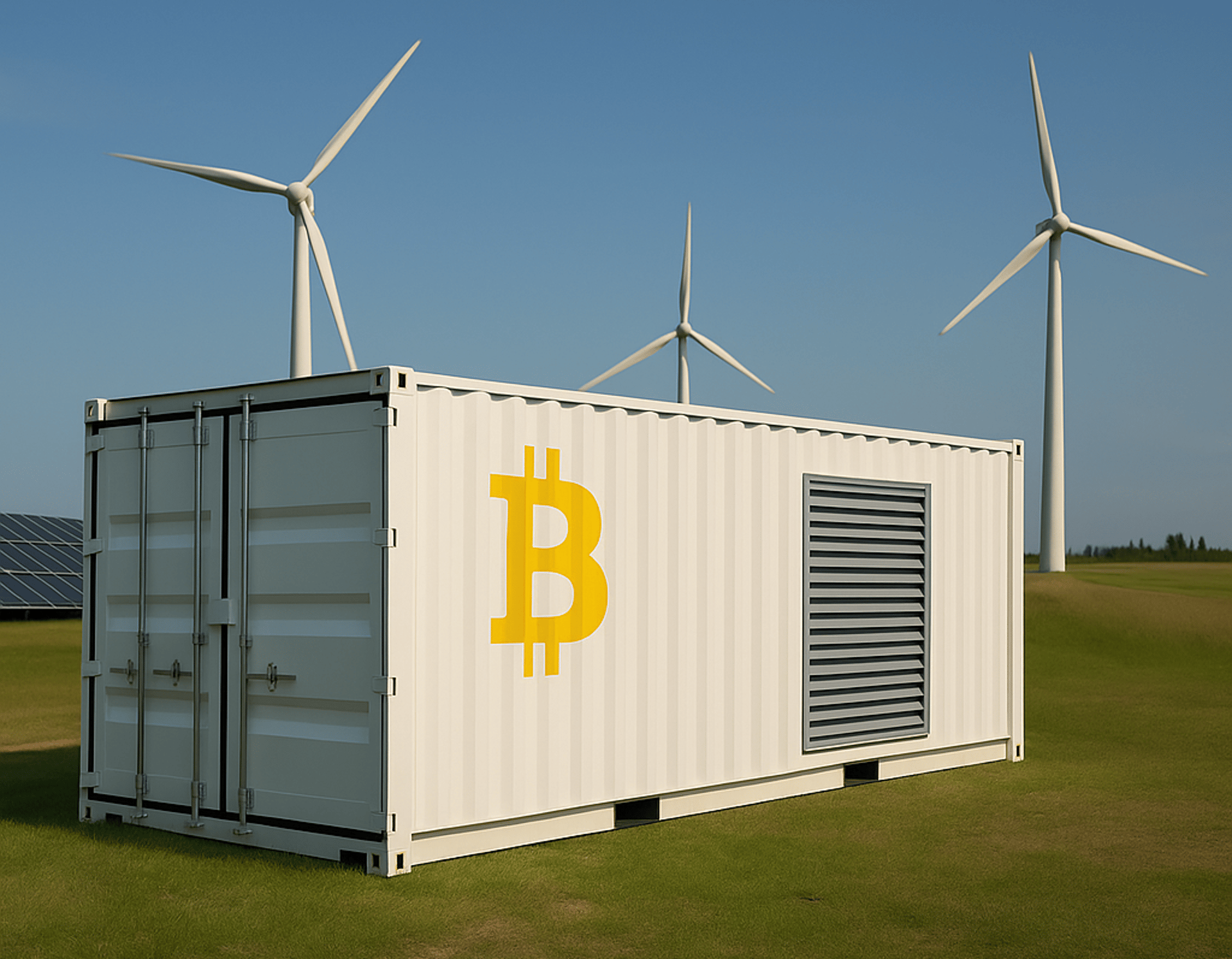
1. The Fundamental Time Mismatch of Renewables
Renewables are structurally asynchronous:
• solar peaks at midday
• wind surges at night or seasonally
• hydro flows vary by rainfall and snowmelt
• demand peaks in the evening and winter
• grids cannot absorb sudden surges
• markets collapse under oversupply
The result is well known:
• curtailment
• negative pricing
• wasted clean energy
• suppressed project returns
This is not a technology problem.
It is a time-alignment problem.
2. Why Batteries Only Partially Solve the Time Problem
Batteries are often presented as the solution — but they only address short time horizons.
Batteries are excellent for:
• milliseconds to seconds (frequency control)
• minutes to hours (load shifting)
They are structurally weak at:
• multi-day surplus
• seasonal overproduction
• prolonged market gluts
• storing value for months or years
They store electrons, not economic value.
And electrons are expensive to store for long periods.
3. Bitcoin Mining Solves a Different Problem Than Batteries
Bitcoin mining does not store electricity.
It converts electricity into something else:
👉 A durable, globally liquid, time-independent asset.
This distinction is critical.
When surplus renewable energy is converted into Bitcoin:
• the energy is monetized immediately
• its economic value is preserved indefinitely
• there is no degradation
• there is no storage decay
• there is no capacity limit
• there is no geographic constraint
Bitcoin becomes a time-shifted representation of energy value.
4. Energy Stored in Time, Not in Matter
Traditional storage answers the question:
“How do we keep energy for later use?”
Bitcoin answers a different question:
“How do we preserve the value of energy until later demand?”
This reframing changes everything.
Instead of forcing renewables to match demand in real time, producers can:
• convert surplus energy into Bitcoin when supply exceeds demand
• hold Bitcoin during periods of low prices
• deploy or liquidate value when conditions improve
The grid no longer dictates timing.
The producer controls it.
5. Bitcoin as Long-Duration Economic Storage
From an economic standpoint, Bitcoin functions as:
• long-duration energy storage
• non-degrading reserve asset
• infinite-capacity value sink
• globally transferable energy value
Unlike batteries:
FeatureBatteriesBitcoinStores energyYesNoStores valueIndirectDirectDegradationYesNoDurationHoursYears+Capacity limitPhysicalNoneGeographic limitsYesNo
This is why Bitcoin mining complements batteries rather than competes with them.
6. Time Arbitrage: The Hidden Revenue Engine
Energy markets are brutally short-term.
They reward:
• instant delivery
• immediate demand
• perfect timing
But renewable producers operate on multi-decade horizons.
Bitcoin allows producers to perform time arbitrage:
• sell energy value in the future instead of the present
• avoid forced selling during price crashes
• smooth revenue across cycles
• align monetization with long-term strategy
This is not speculation.
It is temporal optimization.
7. Why This Changes Project Economics Fundamentally
When time is introduced as a controllable variable:
• curtailment becomes optional
• negative pricing becomes irrelevant
• PPAs lose their dominance
• grid constraints weaken
• overbuild becomes rational
• ROI stabilizes across cycles
Energy assets stop behaving like commodities
and start behaving like strategic value engines.
8. Bitcoin Turns Renewable Volatility Into Stability
Volatility exists because supply and demand collide in time.
Bitcoin decouples that collision.
It absorbs energy when the market cannot
and releases value when conditions improve.
This creates:
• revenue resilience
• balance-sheet strength
• operational independence
• long-term optionality
The more volatile the grid becomes,
the more valuable time-shifted monetization is.
9. Why Energy Owners Understand This Before Anyone Else
Energy producers think in:
• decades
• infrastructure lifecycles
• capital recovery periods
• long-term asset value
They intuitively understand that timing is everything.
Bitcoin mining aligns perfectly with this mindset:
• energy today
• value tomorrow
• control over when monetization occurs
Pure miners chase hash rate.
Energy owners manage time and value.
10. Entropy888: Engineering Time Into Energy Systems
Entropy888 designs mining systems not as short-term profit machines,
but as temporal infrastructure for renewable portfolios.
Our approach enables:
• conversion of surplus energy into long-term reserves
• integration with battery systems
• elimination of forced market timing
• strategic treasury accumulation
• decade-scale value compounding
We don’t store electricity.
We store its economic future.
Conclusion: Time Is the Final Frontier of Renewable Economics
The energy transition will not be won by:
✘ more panels alone
✘ more turbines alone
✘ more batteries alone
It will be won by systems that master time.
Bitcoin mining introduces the missing dimension —
allowing renewable producers to preserve, shift, and deploy energy value across years instead of hours.
Energy that cannot be used now
can still be valuable later.
Bitcoin makes that possible.
This is renewable economics in four dimensions —
and time is the one that changes everything.
Contact
© 2025 Entropy888. All rights reserved.
Powered by Renewable Energy.
Christos Boubalos - Business Development Lead +306972 885885 mob/whatsapp
christos@entropy888.com
-------------------------------------------
General Enquiries - info@entropy888.com